List of approved valuation companies in Dubai

By admin
July 7, 2024
Land Valuation Services in Dubai

Finding Approved Valuation Companies

Here’s where you can access a list of approved valuation companies in the UAE:

Dubai Land Department (DLD) Website: Search for “Approved Valuation Companies” on the DLD website https://dubailand.gov.ae/en/eservices/approved-valuation-companies/.RICS Website: Search for RICS-accredited valuation companies in the UAE through the RICS website (https://www.rics.org/).

Verifying the Valuation Certificate:

Once you receive a valuation certificate, verifying its legitimacy is crucial. Here’s what to check:

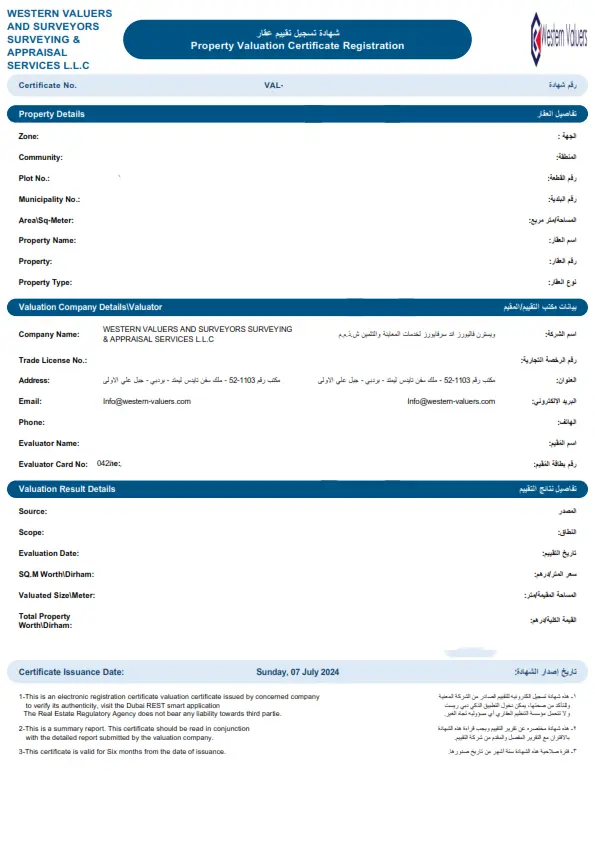
  • Company Logo & Name: Ensure the logo and name on the certificate match those of the approved valuation company you engaged.
  • Company Registration Number: Locate the company’s registration number on the certificate and verify it through the Dubai Land Department (DLD) website using their online service https://dubailand.gov.ae/en/eservices/valuation-certificate-verification-overview/.
  • Certificate Validity: Check the certificate’s validity period. It should typically be valid for a certain timeframe, such as six months.

Approved Valuation Companies Certificate
Request a call back.

Would you like to speak to one of our consultants over the phone?

Just submit your details and we’ll be in touch shortly. 

By prioritizing an approved and accredited valuation company, you guarantee a reliable valuation, ensure Golden Visa application success, and secure peace of mind by mitigating risks. Let your property investment journey in the UAE begin with the right foundation – a trustworthy and accurate valuation certificate.

Understanding Property Valuation Certificates:

A property valuation certificate, issued by a licensed and accredited valuation company, provides an official estimate of a property’s market value. This unbiased assessment is crucial for various purposes in Dubai’s real estate landscape, including:

  • Golden Visa Applications: As mentioned earlier, obtaining a Golden Visa through property investment requires a valuation certificate confirming the property’s value meets the minimum threshold (currently AED 2 million or more).
  • Mortgages: When financing a property purchase, banks rely on valuation certificates to determine the loan amount they can offer.
  • Taxation: Property valuations are used to calculate potential property taxes, such as the annual rental income tax.
  • Investment Decisions: Accurate valuations empower investors to make informed decisions about buying, selling, or renting a property.

Why Choose an Accredited Valuation Company?

Using a reputable and accredited valuation company guarantees several benefits:

  • Accuracy & Credibility: Accredited companies adhere to internationally recognized valuation standards, ensuring a reliable and unbiased estimate. This protects your investment and avoids discrepancies during Golden Visa applications or financial transactions.
  • Regulatory Compliance: Dubai mandates property valuations for various purposes, including Golden Visas. Employing an unapproved company’s certificate could lead to delays or rejections in your application.
  • Market Expertise: Accredited companies boast qualified valuers with extensive experience in the dynamic Dubai market. Their local knowledge ensures an accurate valuation reflecting current trends and specific to your property.
  • Risk Mitigation: Engaging a non-accredited company risks an inaccurate valuation, potentially leading to overpaying for a property or undervaluing it and missing out on potential returns.

MA

admin

Senior Valuer, Western VAS — RICS-qualified chartered surveyor.

Request a Call Back

Tell us about your requirement.
Related

More Insights

Industrial

Commercial property Valuation

Commercial Property Valuation: The Role of the Professional Valuer in the Audit Process

When it comes to financial reporting, accurate property valuation is crucial. A professional valuer plays a vital role in ensuring that assets are valued correctly, which directly impacts the auditing process. Whether you’re dealing with investment properties or commercial real estate, understanding how valuation affects audits can help you navigate the complexities of financial assessments.

In today’s fast-paced market, businesses must rely on precise valuations from reputable property valuation companies. As we delve into the intricate relationship between valuers and auditors, you’ll discover what to expect during an audit and how to prepare effectively. Join us as we explore fair value measurements and their significance in maintaining compliance and transparency in your financial statements.

Commercial Valuation: Auditing And Accounting (End Year Valuation)

End-year valuation is a pivotal process in auditing and accounting. It ensures that financial statements accurately reflect the true value of assets. This assessment becomes particularly significant as companies prepare for annual reports.

Professional valuers conduct thorough evaluations to determine fair market values for various properties. Their expertise helps identify discrepancies, ensuring transparency and compliance with financial regulations.

As businesses approach year-end audits, it’s essential to gather all relevant property documentation early on. A detailed inventory of assets can streamline the valuation process significantly.

Moreover, effective communication between auditors and valuers lays the groundwork for an accurate audit outcome. When both parties collaborate seamlessly, potential issues are addressed proactively, minimizing last-minute surprises during audits.

In a world where precision matters more than ever, understanding end-year valuations can set organizations apart from their competitors. The right approach leads to trustworthiness in reporting and enhances stakeholder confidence.

How to audit fair value measurements for commercial properties 

Auditing fair value measurements is a critical aspect of the audit process. It requires a thorough understanding of both financial reporting standards and the specific assets being valued.

Begin by reviewing the valuation methodologies used. Assess if they align with relevant accounting frameworks, such as IFRS or GAAP. Ensure that these methods are appropriate for the asset type.

Next, verify inputs utilized in valuations. This includes examining market data, rental income estimates, and comparable property values. Engage with real estate valuation services to obtain credible third-party analyses when necessary.

Then, evaluate assumptions made during valuations. Are they realistic? Do they reflect current market conditions?

Document all findings meticulously. A comprehensive record aids in transparency and supports your conclusions during audits of investment properties or any asset class requiring fair value assessments.

Valuations Audits: What to Expect & How to Prepare

Valuation audits can seem daunting, but understanding what to expect makes the process smoother. Initially, auditors will review documentation related to property valuation. This includes appraisals and any prior reports that establish a baseline for value.

Next, they’ll assess methodologies used in the valuations. Did the valuers follow industry standards? This step is crucial as it ensures transparency and reliability in their findings.

To prepare effectively, gather all pertinent documents ahead of time. Ensure access to your Property Valuation Company’s reports and relevant data on market trends.

Communication with your valuation experts is vital as well. Discuss any concerns or discrepancies before the audit begins. Being proactive helps streamline the entire experience.

Be ready for questions about assumptions made during valuation processes. Clear explanations will not only facilitate understanding but also bolster confidence in your financial reporting efforts.

What are the values of auditing?

Auditing serves as a crucial pillar in maintaining trust within financial reporting. It provides transparency and accountability, ensuring that stakeholders can rely on the information presented.

One of the core values of auditing is enhancing credibility. A thorough audit validates financial statements, giving investors and creditors confidence in an organization’s fiscal health.

Moreover, audits identify discrepancies or inefficiencies within processes. This not only helps organizations correct issues but also fosters continuous improvement.

Risk management is another significant value of auditing. By evaluating internal controls and compliance with regulations, auditors help mitigate potential hazards that could impact a business’s viability.

Audits facilitate informed decision-making. With accurate data at hand, management can strategize effectively for future growth while aligning with best practices in governance and standards adherence.

How do you evaluate an audit?

Evaluating an audit involves several key factors that determine its effectiveness and accuracy. First, assess the auditor’s independence. A professional valuator should not have any conflicts of interest with the entity being audited.

Next, examine the scope of the audit. This includes understanding which areas were covered and whether they align with industry standards. A thorough audit will encompass all significant aspects of financial reporting.

Look at the methodology used for property valuation as well. The techniques employed should be sound and appropriate for the type of investment properties evaluated.

Moreover, consider how well findings are communicated in the final report. Clarity is essential; stakeholders need to grasp both risks and recommendations easily.

Feedback from previous audits can provide insights into recurring issues or improvements made over time, reflecting on overall performance quality within a given framework.

Auditing the Valuation of Investment properties

Auditing the valuation of investment properties requires a detailed understanding of real estate markets. It’s not just about numbers; it involves assessing market trends, location specifics, and property condition.

Professional valuers play a crucial role here. Their insights ensure that valuations reflect fair value accurately. They analyze comparable sales, rental income potential, and capital expenditure needs to present an informed opinion.

During audits, transparency is vital. All assumptions made in the valuation process must be clearly documented. This allows auditors to assess whether the estimates used align with industry standards.

Property Valuation Surveys for Financial Reporting provide essential data points necessary for verifying asset values. Auditors will focus on these surveys to confirm consistency and validity in reported figures.

Rigorous auditing ensures that stakeholders can trust financial statements related to investment properties firmly rooted in accurate valuations.

Valuation for auditing

Valuation for auditing is a critical aspect that ensures financial statements reflect accurate and fair values. When auditors assess an organization’s value, they rely on professional valuers to provide precise evaluations.

These valuations must align with accounting standards and regulatory frameworks. The process includes thorough analysis of market data, comparable sales, and income assessments.

Professionals from a property valuation company play a key role here. Their expertise helps identify discrepancies or potential misstatements in asset values.

Additionally, the methodologies employed can vary based on the type of asset being evaluated—whether it’s real estate or investment properties. Each approach requires skillful interpretation to support sound decision-making.

Regular engagement with valuation experts enhances credibility during audits and fosters trust among stakeholders involved in financial reporting activities.

How commercial property Valuation Impacts Financial Audits

Asset valuation plays a pivotal role in the financial audit process. It directly affects how an organization’s financial health is perceived by stakeholders. Accurate property valuations ensure that the reported values on balance sheets reflect true market conditions. This transparency fosters trust with investors, regulators, and clients.

When auditors assess asset valuations, they’re looking for compliance with accounting standards and regulations. If a company underestimates or overstates its assets, it risks severe repercussions during audits. These can range from fines to damaged reputations.

Moreover, real estate valuation services enhance the reliability of financial reporting by providing independent assessments of asset value. A professional valuer ensures that properties are evaluated fairly based on current market trends and potential income generation capabilities.

In markets like Dubai, where property dynamics shift rapidly, timely property valuation surveys become indispensable for accurate reporting. They help businesses stay compliant while presenting stakeholders with reliable data.

Thus, involving a reputable valuation company early in the audit process can streamline operations significantly. Engaging experts who specialize in fair value measurement helps mitigate risks associated with inaccurate valuations.

The impact of thorough asset valuation cannot be understated; it lays the foundation for sound decision-making across various business functions while safeguarding stakeholder interests in every audit cycle.

Read More

Industrial

Property Valuation

Property valuation in Dubai

Dubai, known for its futuristic skyscrapers and luxurious properties, is a hub of real estate activity. Property valuation in this bustling city is a complex process that involves assessing various factors to determine the fair market value of a property. Whether you own a residential apartment overlooking the iconic skyline or a commercial space in a prime location, understanding the valuation methods is crucial.

The Dubai real estate market is influenced by factors such as location, size, amenities, market trends, and infrastructure developments. Valuation companies in Dubai use these elements to calculate the worth of properties accurately. The Dubai Land Department (DLD) plays a significant role in regulating property valuations through its certification process.

Valuation services

RERA property valuation guidelines ensure transparency and fairness in property transactions across Dubai. By availing the property valuation services of reputable valuation companies, property owners can obtain reliable valuation reports that reflect the true value of their assets.

Understanding Property Valuation

Property valuation is a crucial aspect of the real estate market in Dubai. It refers to the process of determining the monetary value of a property, whether it’s residential or commercial. Understanding property valuation involves considering various factors that can influence the value of a property.

Factors such as location, size, condition, and amenities play a significant role in determining the value of a property. Additionally, market trends and demand for similar properties in the area also impact valuation.

By understanding these factors and how they affect property valuation, sellers and buyers can make informed decisions when it comes to pricing their properties or making purchase offers. Working with professional valuation companies in Dubai can help ensure an accurate assessment based on current market conditions and regulations.

Having a solid grasp of property valuation is essential for anyone involved in buying or selling real estate in Dubai.

Factors Affecting Property Valuation in UAE

When it comes to property valuation in the UAE, there are several key factors that can significantly impact the value of a property.

Location plays a crucial role in determining the value of a property in Dubai. Properties located near amenities such as schools, malls, parks, and public transportation tend to have higher valuations.

The condition of the property also affects its valuation. Well-maintained properties with modern finishes are likely to be valued higher than those in need of repairs or renovations.

Market trends and economic conditions can also influence property valuations. Factors such as supply and demand, interest rates, and overall market stability can all impact the perceived value of a property.

Additionally, unique features such as waterfront views, architectural design, and outdoor space can add significant value to a property.

By considering these factors carefully, both buyers and sellers can make more informed decisions when it comes to real estate transactions in the UAE.

Methods of Property Valuation in UAE

When it comes to valuing a property in the UAE, there are several methods that professionals use to determine its worth accurately. One common method is the sales comparison approach, where recent comparable sales in the same area are analyzed to estimate the property’s value. Another method is the income approach, which calculates the property’s value based on its potential income generation.

The cost approach is also used, where the value is determined by estimating how much it would cost to replace or reproduce the property at current prices. Additionally, factors like location, size, condition, and market trends are taken into consideration during valuation.

Valuation experts may combine these methods or prioritize one over another depending on various factors specific to each property being assessed. By utilizing these diverse approaches, professionals can offer comprehensive and accurate property valuations tailored to individual client needs.

Importance of Accurate Property Valuation

Accurate property valuation is crucial in the UAE real estate market for various reasons. It ensures that buyers and sellers are making informed decisions based on the true worth of a property. Knowing the accurate value can prevent overpaying or underselling a property.

Moreover, precise valuations play a significant role in securing financing from banks or financial institutions. Lenders rely on these valuations to determine the loan amount they are willing to provide. Inaccurate valuations could result in financing challenges or even lead to potential financial losses.

For investors, knowing the accurate value of their properties enables them to strategize effectively. They can make sound investment decisions, such as whether to hold, sell, or renovate based on this information.

Accurate property valuation is essential for transparency in the real estate sector and maintaining overall market stability.

Process of Property Valuation in UAE

When it comes to property valuation in the UAE, the process involves a series of steps to determine the true worth of a property. Valuation experts take into account various factors such as location, size, condition, and market trends.

The first step in the process is gathering all relevant information about the property being valued. This includes details about its age, construction quality, amenities, and any recent renovations or upgrades.

Next, valuation professionals analyze comparable properties in the same area that have been recently sold or rented. This helps them understand current market conditions and trends that may impact the value of the subject property.

After collecting data and conducting thorough research, valuation experts use different methods such as income approach, cost approach, and sales comparison approach to determine an accurate valuation for the property.

A detailed report outlining the valuation methodology used and providing justification for the final value is prepared for review by clients or authorities requiring this information.

Tips for Increasing Property Value in UAE

Looking to boost the value of your property in the UAE? Here are some tips that can help you increase its appeal and market worth.

Consider enhancing your property’s curb appeal by maintaining a well-kept exterior. Landscaping, painting, and fixing any structural issues can go a long way in attracting potential buyers or tenants.

Focus on making interior upgrades such as modernizing the kitchen or bathrooms. These are key areas that can significantly impact the overall value of your property.

Moreover, investing in energy-efficient features like solar panels or smart home technology can not only make your property more attractive but also reduce utility costs for future owners or occupants.

Additionally, staying up-to-date with market trends and understanding what amenities are desirable in the current real estate landscape can give you a competitive edge when it comes to valuation.

Conclusion

As property valuation plays a crucial role in the real estate market in Dubai and the UAE, it is essential for property owners to understand its significance. By comprehending the various factors that influence property valuation, utilizing different methods of valuation, and ensuring accuracy throughout the process, individuals can make informed decisions regarding their properties.

Accurate property valuation enables property owners to maximize their investments, secure favorable financing terms, and navigate the competitive real estate market with confidence. By staying informed about current trends and seeking professional assistance when needed from reputable valuation companies or experts in Dubai and the UAE, individuals can effectively enhance their property value and make strategic decisions for long-term success.

Read More

Industrial

Residential property valuation

What is Residential Property Valuation and Why is it Important?

Assessing the value of a property poses a considerable challenge due to the distinct features and characteristics inherent to each property, ensuring that no two are alike. The evaluation of the market value of your house, apartment, or villa assumes paramount significance, particularly when navigating the complexities of the home finance mortgage process, and it is equally essential for tasks such as sales listings and property insurance. 

Get in Touch with Our Valuation Experts

The Valuation Process: Defining Market Value

A residential property valuation is the meticulous process of determining the market value, reflecting the amount a buyer would willingly pay for a property without any compulsion to buy and with a seller who is neither overly eager nor compelled. To ensure the highest standards of professionalism, ethics, and technical expertise, it is advisable to have a residential valuation report prepared in accordance with the RICS ‘Red Book Global Standards.’

Read More

Industrial

Building insurance valuers

When it comes to protecting your property, understanding the nuances of building insurance valuation is crucial. Whether you’re a homeowner or managing a commercial space, knowing the right value can save you from financial pitfalls. In bustling cities like Dubai, where real estate fluctuates rapidly, having accurate assessments is more important than ever. So how do we determine what our buildings are truly worth? This journey begins with professional valuers who specialize in insurance valuations. Let’s dive into the essentials of building insurance and discover why these services are indispensable for safeguarding your investments.

Building insurance valuation

Building insurance valuation is a critical process that assesses the worth of your property for insurance purposes. It’s not just about the market price; it encompasses the cost to rebuild or repair structures in case of damage.

These valuations take into account various factors, including location, materials used, and current construction trends. Every detail matters when determining an accurate valuation.

For property owners in dynamic markets like Dubai, having precise evaluations helps avoid underinsurance. This can lead to significant financial losses if disaster strikes.

RICS-certified valuers utilize their expertise to provide credible assessments tailored to each property’s unique characteristics. Their insights ensure you have adequate coverage so you’re protected from unexpected costs down the line.

Investing time in understanding building insurance valuation can pay off tremendously when it’s most needed.

Cost, Value and Price

Understanding cost, value, and price is crucial in the world of building insurance. Cost refers to the underlying expenses incurred during construction or acquisition. It includes materials, labor, and overheads.

Value reflects what a property is worth in the market context. This can fluctuate based on demand and location dynamics. In Dubai’s vibrant real estate scene, property values can shift rapidly.

Price is the amount a buyer pays for an asset at any given moment. It often aligns with both cost and value but can diverge due to external factors like economic conditions or buyer sentiment.

When it comes to insurance valuation, these three components intertwine intricately. Insurers must carefully assess each element to determine appropriate coverage levels for properties while ensuring clients receive fair protection against potential risks.

Insurance valuation report

An insurance valuation report is a crucial document that provides an accurate assessment of your property’s worth. This detailed analysis helps ensure you have the right level of coverage for your building.

Typically prepared by qualified valuers, these reports consider various factors such as location, condition, and market trends. The aim is to establish a fair value that reflects current circumstances in Dubai’s dynamic real estate landscape.

The report includes comprehensive data supporting the valuation conclusion. It outlines replacement costs, potential risks, and any unique features that might influence value. For those seeking RICS-accredited services, this rigorous approach guarantees credibility.

Having a well-crafted insurance valuation report can save you from underinsurance or overpayment on premiums. It provides peace of mind knowing your investment is adequately protected against unforeseen events.

Insurance valuation services

Insurance valuation services play a crucial role in ensuring that property owners are adequately covered. These services provide detailed assessments of the true value of buildings, which is vital for setting appropriate insurance premiums and coverage limits.

Professional valuers utilize their expertise to consider various factors such as location, condition, and market trends. With RICS-accredited professionals in Dubai, you can expect reliable insights tailored to your specific needs. Engaging with experts ensures you’re not overpaying for coverage or leaving yourself underinsured.

Whether it’s a residential property or a commercial building, accurate valuations help mitigate risks associated with unforeseen events like fires or natural disasters. By investing in quality insurance valuation services, property owners gain peace of mind knowing they are well protected against potential losses.

As the real estate landscape continues to evolve in Dubai and beyond, staying informed about your property’s value remains essential. Partnering with skilled valuers guarantees that your investment is secure while navigating the complexities of insurance policies effectively.

Read More

Industrial

UAE Golden Visa for Property Owners

UAE Golden Visa for Property Owners: Benefits, Process, Cost & More

The UAE Golden Visa has emerged as an attractive option for property owners looking to secure their future in the United Arab Emirates. This long-term residency visa allows individuals to live, work, and study in the UAE without the need for a national sponsor. With its numerous advantages, the Golden Visa has garnered significant attention from both local and international investors.

UAE Golden Visa

The UAE Golden Visa offers long-term residency for property investors seeking stability, opportunity, and access to world-class infrastructure. Introduced in 2019, this visa allows eligible individuals to live, work, and study in the UAE without a local sponsor. For property owners, it’s a strategic gateway to secure a 10-year renewable residency.

What Is the UAE Golden Visa?

The Golden Visa is a long-term residence permit valid for 5 or 10 years, depending on the category. Property investors qualify by owning real estate valued at AED 2 million or more. The visa is renewable as long as the investment is maintained.

For official details, visit the Dubai Land Department Golden Visa Portal.

Benefits of the Golden Visa for Property Owners

  • 10-Year Residency: No need for a local sponsor.
  • Family Sponsorship: Include spouse, children, and parents.
  • Business Ownership: Full control over business operations.
  • Multiple Entry: Travel freely in and out of the UAE.
  • Access to Services: Open bank accounts, enroll in schools, and access healthcare.
  • Retirement Planning: Ideal for long-term settlement and retirement in the UAE.

🛠️ Application Process for Property Owners

  1. Eligibility Check: Own property worth AED 2 million or more. Mortgaged properties are accepted if AED 2 million is paid (bank letter required).
  2. Document Preparation: Passport, title deed, personal photo, UAE ID (if available), current visa copy.
  3. Submit Application: Apply via the Dubai Land Department or authorized service centers like DLD Cube.
  4. Medical & Emirates ID: Complete medical fitness test and biometric registration.
  5. Visa Issuance: Receive your 10-year residency permit upon approval.

Cost Breakdown

ItemEstimated Cost (AED)
Property Investment2,000,000+
Visa Application Fees4,000–6,000
Medical Test & Emirates ID1,000–1,500
Translation & Attestation500–1,000

🏷️ Types of Golden Visa for Property Investors

  • Individual Ownership: Sole ownership of qualifying property.
  • Joint Ownership: Spouse can co-own property (attested marriage certificate required).
  • Mortgaged Property: Accepted if AED 2 million is paid upfront (bank NOC required).

📊 Property Valuation Criteria

  • Minimum Value: AED 2 million at time of purchase.
  • Valuation Certificate: May be required for older or off-plan properties.
  • Bank Statements: Proof of payment for mortgaged properties.
  • Multiple Properties: Can be combined under one name to meet threshold.

For valuation services, consult certified firms like Windmills Group.

🏢 Role of Dubai Land Department (DLD)

The Dubai Land Department facilitates property registration, valuation, and Golden Visa applications. Through its online portal and service centers, DLD ensures a streamlined process for investors. Services include:

  • Title deed issuance
  • Property valuation
  • Application tracking
  • Coordination with immigration authorities

Final Thoughts

The UAE Golden Visa is a powerful tool for property investors seeking long-term residency and financial freedom. With clear eligibility criteria, streamlined processes, and support from the Dubai Land Department, securing your 10-year visa is more accessible than ever.

For full details and to begin your application, visit the official DLD Golden Visa page.

Read More

Industrial

Leasehold Property Valuation

Leasehold valuation and freehold properties Dubai

When it comes to the dynamic real estate market in Dubai, understanding the ins and outs of leasehold and freehold properties is crucial. Whether you are a buyer or seller, grasping the nuances of property valuation can make all the difference in securing a fair deal. In this blog post, we delve into the world of leasehold and freehold valuation in Dubai, exploring key differences, essential factors affecting pricing, common pitfalls to avoid, and valuable tips for navigating this intricate process with confidence. So buckle up as we embark on a journey through the fascinating realm of property valuation in one of the most vibrant cities in the world!

Understanding Leasehold and Freehold: What are They?

Leasehold and freehold are two common types of property ownership in Dubai with distinct characteristics.

A leasehold property means that the buyer has the right to occupy the property for a specific period, typically long-term leases ranging from 30 to 99 years. In contrast, freehold ownership grants the buyer full rights over the property indefinitely.

Leasehold properties involve paying ground rent to the landowner, whereas freehold properties do not have this additional cost. This difference can impact the overall value of each type of property.

When it comes to leaseholds, owners must adhere to certain restrictions outlined in their lease agreements, while freehold owners enjoy more flexibility and autonomy over their properties.

Understanding these fundamental differences is essential for both buyers and sellers looking to navigate Dubai’s diverse real estate landscape effectively.

Leasehold and Freehold Valuation

Understanding the differences between leasehold and freehold property valuations is essential for buyers and sellers in Dubai.

Leasehold properties involve owning a property for a specific period, while freehold properties grant ownership indefinitely. These distinctions greatly impact how properties are valued in the real estate market.

When it comes to valuation, leasehold properties are typically valued based on the remaining lease term, ground rent obligations, and potential lease extension costs. On the other hand, freehold properties are valued based on their location, size, condition, and market demand.

Factors such as location trends, economic conditions, development projects in the area, and amenities nearby play a significant role in determining the value of both types of properties. Buyers and sellers need to consider these aspects when assessing property values in Dubai’s competitive market.

Factors That Affect Leasehold and Freehold Valuation in Dubai

Factors that impact the valuation of leasehold and freehold properties in Dubai can vary significantly. For leasehold properties, the remaining lease term is a crucial factor. The longer the lease period, the higher the value of the property. Additionally, maintenance fees and ground rent can influence valuation.

On the other hand, for freehold properties, location plays a vital role in determining value. Properties located in prime areas with access to amenities tend to have higher valuations. Infrastructure developments and market demand also affect freehold property values.

Market trends and economic conditions can impact both types of property valuations in Dubai. Fluctuations in real estate demand and supply can lead to fluctuations in prices. Understanding these factors is essential for buyers and sellers looking to assess the true worth of their leasehold or freehold property in Dubai.

The Importance of Accurate Valuation for Buyers and Sellers

Accurate valuation is crucial for both buyers and sellers in Dubai’s real estate market. For buyers, knowing the true value of a property ensures they are not overpaying or getting into a bad deal. It helps them make informed decisions about their investment. On the other hand, sellers benefit from accurate valuation by setting a competitive price that attracts potential buyers while maximizing their profit.

An inaccurate valuation can lead to financial losses and legal disputes down the line. Buyers might end up paying more than what a property is worth or face challenges securing financing. Sellers risk pricing themselves out of the market or losing potential buyers due to unrealistic expectations.

By working with qualified valuers who understand the local market dynamics, both buyers and sellers can navigate transactions smoothly and confidently. Whether it’s for residential or commercial properties, accurate valuation sets the foundation for successful real estate transactions in Dubai’s diverse landscape.

Tips for Calculating Leasehold and Freehold Values in Dubai

When it comes to calculating the values of leasehold and freehold properties in Dubai, there are several key tips to keep in mind. Understanding the terms of the lease or ownership is crucial as this will directly impact the property’s value.

Consider factors such as location, size, condition, and amenities when assessing the value of a property. These elements play a significant role in determining how much a buyer would be willing to pay for a leasehold or freehold property in Dubai.

Consulting qualified valuers who have experience with properties in Dubai is essential for obtaining an accurate valuation. Valuers can provide insights into market trends and help determine a fair price based on current real estate conditions.

Additionally, researching recent sales of comparable properties can give you a better understanding of what similar leasehold or freehold properties are selling for in Dubai’s market. This information can serve as a valuable benchmark when calculating property values accurately.

By following these tips and utilizing expert advice, you can ensure that you are getting an accurate valuation for your leasehold or freehold property in Dubai. Contact us today to connect with qualified valuers who can assist you through this process seamlessly.

Common Mistakes to Avoid in the Valuation Process

When it comes to property valuation in Dubai, there are some common mistakes that both buyers and sellers should avoid. One of the most significant errors is relying solely on online tools for valuation. While these can provide an estimate, they often lack accuracy due to not accounting for specific details of the property.

Another mistake is neglecting to consider recent market trends. Factors such as economic conditions, demand-supply dynamics, and government policies can all impact the value of a property. Failing to take these into account may lead to either overvaluing or undervaluing a property.

Additionally, overlooking the condition of the property can be a costly mistake. Factors like maintenance issues, renovations needed, or structural problems should all be considered when determining its value.

Not seeking professional help from qualified valuers can result in inaccurate valuations. It’s crucial to consult experts who have experience in the Dubai real estate market and understand its nuances for an accurate assessment of a property’s worth.

Understanding the difference between leasehold and freehold properties

When it comes to property ownership in Dubai, understanding the difference between leasehold and freehold is crucial.

Leasehold properties grant you the right to use a property for a specific period, typically long-term leases ranging from 30 to 99 years. On the other hand, freehold properties provide full ownership of both the property and land indefinitely.

While leasehold properties offer limited ownership rights, freehold properties give you complete control over your investment. Leaseholds are subject to potential renewal fees and restrictions imposed by landlords, whereas freeholds offer more flexibility and autonomy.

In Dubai, knowing whether a property is leasehold or freehold can significantly impact its value and future prospects in the real estate market. It’s essential to grasp these distinctions before diving into property transactions in this dynamic city.

Factors that affect the valuation of leasehold and freehold properties in Dubai

Factors that impact the valuation of leasehold and freehold properties in Dubai can vary significantly. One key factor is the location of the property, as prime areas tend to command higher values due to demand. The size and condition of the property also play a crucial role in determining its worth.

Another important consideration is the current market trends in Dubai’s real estate sector. Fluctuations in supply and demand can influence property valuations, making it essential to stay updated on market dynamics. Additionally, amenities and facilities within or near the property can affect its value positively.

The length of remaining lease terms for leasehold properties is a critical factor since shorter leases typically result in lower valuations. On the other hand, freehold properties offer more stability and may be perceived as more valuable due to ownership rights. Other factors such as infrastructure developments, zoning regulations, and economic conditions also contribute to shaping property valuations in Dubai.

The importance of accurate property valuation in Dubai

Property valuation is a crucial aspect of the real estate market in Dubai. Whether you are buying or selling a property, having an accurate understanding of its value is essential. Without proper valuation, you may end up overpaying for a property or selling it below its actual worth.

In Dubai’s competitive market, knowing the true value of your property can give you a significant advantage. It allows buyers to make informed decisions and negotiate fair prices while helping sellers showcase their properties at the right price point.

Accurate valuation also plays a key role in securing financing from banks or financial institutions. Lenders rely on property valuations to determine loan amounts and interest rates, making precise valuation vital for successful transactions.

By working with qualified valuers who understand the intricacies of Dubai’s real estate market, you can ensure that your property is valued correctly. This not only safeguards your investment but also sets you up for success in any real estate transaction.

How to determine the value of a leasehold or freehold property

When determining the value of a leasehold or freehold property in Dubai, it is essential to consider various factors that can impact its worth. One key aspect to look at is the location of the property, as areas with high demand tend to have higher values. Additionally, examining recent sales data of similar properties in the area can provide valuable insights into pricing trends.

Another crucial factor to consider is the condition of the property and any renovations or upgrades that have been done. These improvements can significantly influence its value. Moreover, assessing market conditions and economic trends can help gauge whether it’s a buyer’s or seller’s market.

Engaging qualified valuers who have expertise in Dubai’s real estate market can also be beneficial in accurately determining the value of your leasehold or freehold property. By considering all these aspects comprehensively, you can ensure that you are getting an accurate assessment of your property’s worth.

Common mistakes made during property valuation

When it comes to property valuation in Dubai, there are common mistakes that both buyers and sellers should be aware of to ensure a fair assessment. One mistake is overlooking recent market trends or relying on outdated information when determining the value of a property. This can lead to either overpricing or underpricing the property, affecting the negotiation process.

Another mistake is neglecting to consider the condition of the property and any potential renovations or repairs needed. Failing to account for these factors can result in an inaccurate valuation that doesn’t reflect the true worth of the property. Additionally, not seeking professional help from qualified valuers can lead to errors in estimating the value, as they have the expertise and knowledge required for accurate assessments.

Moreover, emotions can sometimes cloud judgment during valuation, causing individuals to either overvalue or undervalue a property based on personal attachment rather than objective criteria. It’s important to approach valuation with a clear mindset and rely on facts rather than emotions for an accurate assessment.

Tips for negotiating a fair price for a leasehold or freehold property in Dubai

When negotiating a fair price for a leasehold or freehold property in Dubai, it’s crucial to do your research. Start by understanding the current market trends and comparable sales in the area. This will give you a realistic idea of what the property is worth.

Next, consider hiring a qualified valuer who can provide an accurate valuation of the property. Their expertise can be invaluable during negotiations, helping you make informed decisions based on solid data.

During negotiations, be prepared to discuss any factors that may affect the property value, such as lease terms or maintenance fees. Stay flexible and open-minded while also being clear about your budget and expectations.

Don’t rush into making a decision. Take your time to carefully evaluate all aspects of the deal before finalizing anything. By staying patient and strategic in your negotiations, you’ll increase your chances of securing a fair price for your leasehold or freehold property in Dubai.

Conclusion

Understanding the differences between leasehold and freehold properties in Dubai is crucial for both buyers and sellers. Accurate valuation plays a pivotal role in making informed decisions when it comes to property transactions. By considering the various factors that affect property valuation, avoiding common mistakes, and following tips for calculating values, individuals can ensure they are getting fair deals.

For those navigating the real estate market in Dubai, seeking assistance from qualified valuers is highly recommended. A reputable valuation company with expertise in leasehold and freehold properties can provide valuable insights and guidance throughout the process. Remember, knowing the true value of a property is key to making sound investment choices and achieving successful transactions in Dubai’s dynamic real estate landscape.

Read More

Industrial

How do I value my property in Dubai

Introduction to property valuation in Dubai

Welcome to the dynamic world of Dubai real estate, where property values can fluctuate like sand dunes in the desert. Whether you’re a homeowner, investor, or simply curious about your property’s worth, understanding how to accurately value your piece of this bustling metropolis is key. In this blog post, we will delve into the intricacies of property valuation in Dubai – from factors that influence prices to methods for determining your property’s true worth. So grab a coffee (or perhaps some Arabic tea) and let’s navigate through the maze of valuing properties in one of the most vibrant real estate markets in the world!

Get in Touch with Our Valuation Experts

Factors that affect property value in Dubai

Dubai’s property market is influenced by various factors that can impact the value of real estate assets in the city. One significant factor is location, with properties situated in prime areas like Downtown Dubai or Palm Jumeirah often commanding higher prices due to their proximity to amenities and attractions.

The condition of the property also plays a crucial role in determining its value – well-maintained homes with modern facilities tend to fetch better prices compared to those requiring renovations. Additionally, market demand and supply dynamics can heavily influence property values, with an oversupply leading to price decreases while high demand can drive prices up.

Economic conditions, such as interest rates and overall financial stability, can sway property values as well. Political stability and government policies regarding foreign ownership also impact investor confidence in Dubai’s real estate sector. Infrastructure developments like new transport links or entertainment venues can boost property values in certain areas.

Methods of property valuation in Dubai

When it comes to valuing a property in Dubai, there are several methods that can be utilized to determine its worth accurately. One common method is the sales comparison approach, where recent sales of similar properties in the area are analyzed to establish a fair market value.

Another method often used is the income approach, especially for commercial properties. This involves examining the potential income the property could generate through rentals or leases.

The cost approach is also a valuable method, which calculates the value of a property based on how much it would cost to replace or reproduce it at current prices.

In Dubai’s dynamic real estate market, each method has its strengths and limitations. It’s crucial to consider various factors such as location, size, condition, and market trends when evaluating a property using these approaches.

Property Value dubai
Read More

Industrial

What’s Your Home Really Worth in Dubai Right Now? A Smarter Way to Think About Valuation

There’s a moment every property owner in Dubai reaches. You start wondering what your home is actually worth today, not what you bought it for, not what your neighbour claims theirs sold for, and definitely not what a random online estimate suggests. The Dubai market moves fast. Prices shift, demand changes, and suddenly that number in your head feels… outdated.

So let’s talk about a smarter way to think about property valuation in Dubai, one that actually reflects reality and helps you make confident decisions.

Why “Market Value” in Dubai Isn’t as Simple as It Sounds

A lot of people assume property valuation is just about checking recent sales in the area. That’s part of it, but it barely scratches the surface.

In a city like Dubai, value is influenced by layers of factors:

Location still rules, but it’s more nuanced now

It’s not just about which area your property is in. It’s about:

  • Proximity to upcoming developments
  • Accessibility and infrastructure improvements
  • Community demand trends

Two properties in the same neighborhood can have very different values depending on these micro-factors.

Market timing matters more than ever

Dubai’s property market is known for its cycles. A valuation done six months ago might already be outdated. Buyer demand, interest rates, and investor sentiment all play a role.

Property condition and upgrades

Renovations, layout changes, and maintenance quality can significantly impact value. A well-maintained unit can easily outperform comparable listings.

This is exactly where professional valuation starts to separate itself from guesswork.

What Professional Property Valuation Actually Looks Like

A proper valuation isn’t just a number. It’s a detailed, data-backed assessment that stands up to scrutiny, whether you’re selling, refinancing, or planning investments.

Working with a firm like Western Valuers & Surveyors means your valuation is built on:

RICS-compliant standards

This is a big one. Reports follow the Royal Institution of Chartered Surveyors’ globally recognized frameworks. That means your valuation is credible, consistent, and accepted by banks, investors, and legal bodies.

Independent and unbiased analysis

Unlike agencies that also sell property, independent valuers have no incentive to inflate or deflate your property’s value. You get a clear, honest figure.

Deep market intelligence

It’s not just about recent sales. It’s about:

  • Market trends
  • Supply and demand shifts
  • Future development impact
  • Investment potential

Tailored reporting

Whether it’s residential, commercial, or industrial, your report is specific to your asset and your goals.

That level of detail is what turns a valuation into a decision-making tool.

When Should You Get a Property Valuation in Dubai?

A lot of people wait until they’re selling. That’s actually a missed opportunity.

Here are smarter moments to get your property valued:

Before selling

Set the right asking price and avoid sitting on the market too long.

Before refinancing

Banks rely on accurate valuations to determine lending amounts.

For investment planning

Understanding your asset value helps you decide whether to hold, sell, or expand your portfolio.

For insurance and compliance

This is where things get interesting. A valuation is often tied to reinstatement cost assessments and building consultancy services.

The Overlooked Side of Valuation: Reinstatement Costs and Risk

Here’s something most property owners don’t think about until it’s too late.

Your property’s market value is not the same as the cost to rebuild it.

That’s where services like reinstatement cost assessments come in. Firms like Western Valuers & Surveyors provide detailed calculations to ensure your property is adequately insured.

Why does this matter?

  • Underinsurance can leave you exposed in case of damage
  • Overinsurance means you’re paying more than necessary
  • Accurate figures protect your financial position

This is a smarter, more complete way of thinking about property value.

How Strategic Advisory Takes Valuation Even Further

Valuation tells you what your property is worth. Strategic advisory tells you what to do next.

With services like:

  • Feasibility studies
  • Highest and best use analysis
  • Development option analysis

You move from “what is it worth” to “how can it perform better.”

This is especially powerful in Dubai, where land use, redevelopment potential, and investment strategies can dramatically change asset value.

Why Western Valuers and Surveyors Stand Out in Dubai

There are plenty of valuation firms out there. What makes Western Valuers & Surveyors different comes down to a few things:

Proven track record

  • AED 70B+ assets valued
  • 7,000+ projects completed

Full-service expertise

From residential valuations to plant and machinery, they cover a wide range of asset classes.

Compliance and credibility

RICS-regulated and aligned with international valuation standards and financial reporting frameworks.

Transparent pricing

No hidden fees. Clear, competitive pricing structures.

Client-first approach

Strong communication, timely delivery, and reports you can actually understand and use.

It’s not just about delivering a report. It’s about helping you make smarter property decisions.

So, What Is Your Home Really Worth?

The honest answer is this: it depends, but it shouldn’t be a guess.

Your property’s value is shaped by:

  • Market conditions
  • Location dynamics
  • Property condition
  • Future potential

A professional valuation brings all of this together into a clear, actionable insight.

Ready to Find Out Your Property’s True Value?

Whether you’re planning to sell, invest, refinance, or simply want clarity, getting a professional valuation is one of the smartest moves you can make.

Reach out to Western Valuers & Surveyors today to request a callback or a tailored valuation report. Their team of RICS-qualified consultants will guide you through every step, ensuring your property decisions are backed by precision, transparency, and real market insight.

FAQs: Property Valuation in Dubai

How long does a property valuation take in Dubai?

Typically, it can take a few days, depending on the property type and complexity of the report.

Is a valuation the same as a real estate agent’s price estimate?

No. A valuation is a formal, independent, and data-backed report, while agent estimates are often informal and influenced by market positioning.

Do banks in Dubai require RICS valuations?

Yes, most banks prefer or require RICS-compliant reports for lending and refinancing.

Can renovations increase my property value?

Yes, especially upgrades that improve functionality, aesthetics, and energy efficiency.

How often should I get my property valued?

Ideally, every 1–2 years, or whenever you’re making a major financial decision involving your property.

The takeaway is simple. In a market as dynamic as Dubai, guessing your property’s value is risky. A smart, professional valuation gives you clarity, confidence, and control.

References and Resources

Read More

Industrial

Real Estate Valuation for UAE Companies

Navigating the complex world of real estate valuation can be daunting, especially for companies in the UAE. With rapid market fluctuations and evolving standards, understanding how to accurately assess property value is vital. One key player in this landscape is the International Financial Reporting Standards (IFRS), which sets benchmarks that help ensure consistency and transparency in financial reporting across borders.

As businesses strive to remain competitive, leveraging IFRS can provide a clearer picture of asset values and enhance decision-making processes. This blog delves into the essential role of IFRS in property valuation for UAE companies while exploring various tools and approaches available today. Whether you’re a seasoned investor or new to the real estate scene, this insight will empower you with knowledge about effective property valuation strategies tailored for your needs. Let’s embark on this journey through the intricacies of valuing assets in one of the most dynamic markets globally!

The Role of IFRS in Real Estate Valuation for UAE Companies

The International Financial Reporting Standards (IFRS) play a crucial role in shaping real estate valuation for companies operating in the UAE. As the region continues to develop its financial landscape, adhering to these standards ensures consistency and transparency in reporting property values.

For UAE companies, compliance with IFRS helps create a standardized approach to asset valuation. This not only fosters confidence among investors but also aligns local practices with international norms. A uniform framework allows stakeholders to make informed decisions based on reliable data.

Moreover, IFRS emphasizes fair value measurement, which is particularly important in volatile markets like real estate. By focusing on current market conditions rather than historical costs, businesses can present a more accurate picture of their assets’ worth.

In addition to providing clarity and consistency, IFRS assists companies during audits and financial reviews. External auditors rely heavily on these standards when assessing property valuations, ensuring that firms meet rigorous regulatory requirements.

Embracing IFRS enhances credibility within the competitive real estate sector of the UAE. Companies that comply are better positioned for growth and investment opportunities as they navigate an ever-evolving marketplace.

Instant Online Valuation

Instant online valuation tools have revolutionized the property valuation process. Gone are the days of lengthy assessments and waiting for professionals to provide estimates. Now, anyone can quickly get an idea of their property’s worth with just a few clicks.

These platforms leverage advanced algorithms and market data to deliver instantaneous results. They analyze various factors, including location, recent sales in the area, and property features. This immediacy allows homeowners or investors to make informed decisions without extensive delays.

However, it’s important to note that while these valuations are fast and convenient, they may not always reflect true market conditions accurately. They serve as a starting point rather than a definitive answer when assessing value. Users should consider them alongside professional appraisals for more comprehensive insights.

Many UAE companies incorporate such tools into their business models to enhance customer experience. By providing instant valuations on their websites, real estate firms attract potential clients seeking quick information before engaging further.

Instant online valuation is transforming how people approach property assessment in the UAE’s dynamic real estate landscape.

Free Property Valuation

Free property valuation services are becoming increasingly popular in the UAE. Homeowners and investors often seek these valuations to understand their property’s worth without incurring costs. This can be especially beneficial for those looking to sell or refinance.

Many online platforms offer free property valuation tools. These tools use algorithms that consider various factors, such as location, size, and recent sales data in the area. Users can input basic information about their property and receive an instant estimated value.

While free valuations provide a quick snapshot of market trends, they may not always reflect true market conditions. Automated estimates can’t account for individual property nuances that affect value significantly—like renovations or neighborhood developments.

It’s important to remember that relying solely on automated systems might lead to misunderstandings about your property’s actual worth. For serious decisions regarding buying or selling, pairing online tools with professional appraisals is wise.

In a competitive real estate market like the UAE’s, knowing your property’s value helps you make informed choices. Whether you’re considering selling or investing further, understanding its worth is crucial for achieving favorable outcomes.

House Price Index

The House Price Index (HPI) is a crucial metric for understanding the real estate market’s dynamics. It tracks changes in property prices over time, providing buyers, sellers, and investors with valuable insights. In the UAE, where real estate can be particularly volatile, this index serves as a reliable barometer of market trends.

By measuring price fluctuations across various regions and property types, the HPI enables stakeholders to make informed decisions. For instance, if an area shows consistent growth in its index score, it may signal rising demand. Investors often use this data to identify potential opportunities before they become mainstream.

Moreover, government agencies utilize the HPI to gauge economic health within the housing sector. A stable or growing index typically correlates with increased consumer confidence and spending power—essential factors that drive property valuation upward.

For homeowners looking at their property’s worth over time, understanding how their location fits into the broader house price trend is critical. This perspective helps them assess whether it’s a good time to sell or hold onto their investment.

Monitoring the House Price Index provides essential context for anyone involved in property valuation processes across the UAE’s diverse landscape.

Online Valuation Tools

Online valuation tools have revolutionized the way property valuation is conducted. These platforms utilize advanced algorithms and data analytics to provide quick estimates of property values, making them accessible to both buyers and sellers.

Users can input basic information about a property, such as its location, size, and features. The tool then cross-references this data with market trends and comparable sales in the area. This helps generate an instant estimate that reflects current market conditions.

For UAE companies navigating real estate transactions, these tools offer a valuable starting point. They save time by streamlining initial assessments before engaging professional valuers for detailed analyses.

However, while online valuations are convenient, they should be used cautiously. Various factors like recent renovations or unique property characteristics may not always be captured accurately in automated systems.

Online valuation tools serve as practical resources but shouldn’t replace comprehensive appraisals performed by qualified professionals who understand local markets intricately. Balancing technology with expert insights ensures more reliable outcomes in property valuation decisions.

Understanding Valuation Accuracy

Valuation accuracy is crucial in property valuation, especially in a dynamic market like the UAE. It determines how closely a property’s assessed value aligns with its actual market worth. Accurate valuations help stakeholders make informed decisions, impacting investments and financial planning.

Several factors affect valuation accuracy. Market conditions can shift rapidly, influenced by economic trends and buyer demand. A robust understanding of these elements ensures that appraisals reflect real-time data.

Additionally, methodology plays a significant role. Different approaches—such as comparative analysis or income generation models—yield varying results based on the criteria used. Selecting the right method for each unique property is essential to achieving accurate outcomes.

Technology has also transformed valuation processes. Advanced online tools enable quicker assessments while incorporating vast datasets for precise calculations. However, reliance solely on technology without expert insight can lead to discrepancies.

Professionals should always validate their findings through comprehensive research and experience-based judgment. This holistic approach not only enhances accuracy but also builds trust among clients seeking reliable property valuations.

Factors Influencing Property Valuation

Property valuation is a complex process influenced by various factors. One primary element is location. Properties in prime areas tend to command higher prices due to demand, accessibility, and proximity to amenities.

The condition of the property also plays a significant role. Well-maintained homes with modern fixtures typically attract better valuations than those requiring extensive repairs or updates. Buyers often seek move-in-ready options, which boosts perceived value.

Market trends cannot be overlooked either. Fluctuations in supply and demand directly impact pricing dynamics. A surge in new developments can saturate the market, potentially lowering values for existing properties.

Economic conditions further contribute to valuation changes. Interest rates influence borrowing costs, affecting purchasing power for potential buyers. When economic growth is steady, confidence increases; conversely, downturns can lead to reduced valuations.

The size and layout of a property add another layer of complexity to its valuation. Larger homes with functional designs generally appeal more than smaller spaces lacking flow or practicality—an essential consideration for prospective homeowners looking for comfort and convenience.

Importance of Professional Valuations

Professional valuations play a critical role in the real estate market, especially for companies operating in the UAE. Accurate property valuation ensures that stakeholders make informed decisions based on reliable data.

When it comes to investment opportunities, professional valuers bring extensive knowledge and expertise. They understand local market trends and can evaluate properties against current economic conditions. This insight is invaluable for potential buyers or sellers looking to maximize their investments.

Additionally, professional valuations help maintain transparency within transactions. When an independent expert assesses a property’s worth, it builds trust among all parties involved. Transparent processes are essential in attracting more investors into the UAE’s burgeoning real estate sector.

Moreover, banks and financial institutions often require professional appraisals before approving loans. These assessments safeguard lenders from making risky financial commitments while ensuring borrowers receive fair financing options.

Conducting regular professional valuations allows property owners to stay updated with their asset values over time. As markets fluctuate, understanding these changes helps in strategic planning for future investments or sales.

Enhancing Property Value

Enhancing property value is essential for homeowners and investors alike. Various strategies can be employed to maximize the worth of a real estate asset. Simple renovations often yield substantial returns, making properties more appealing to potential buyers or tenants.

Curb appeal plays a significant role in attracting interest. A well-maintained exterior, including landscaping and fresh paint, creates an inviting first impression. Small changes like updated lighting fixtures or modern door handles can also elevate the overall aesthetic and feel of a home.

Energy efficiency upgrades are increasingly popular among buyers looking for long-term savings. Installing energy-efficient windows, appliances, or smart home technology not only reduces utility costs but also aligns with sustainable living trends that many seek today.

Location remains paramount in determining value. Investing in neighborhoods on the rise can lead to impressive returns over time as infrastructure improves and local amenities expand. Understanding market dynamics helps in identifying these hotspots early on.

Professional staging during sales processes showcases a property’s best features effectively. By creating an emotional connection with prospective buyers, staged homes often sell faster and at higher prices than their unstaged counterparts do.

Challenges in Real Estate Valuation

Real estate valuation is a complex process, fraught with challenges. One significant hurdle is the lack of comparable sales data in certain areas. When properties are unique or in less populated regions, finding similar transactions becomes difficult. This can lead to inaccurate valuations and misinformed investment decisions.

Market fluctuations also pose a challenge. The real estate market can change rapidly due to economic conditions or local developments. Valuers must stay updated on trends to provide an accurate assessment, but even that can be unpredictable.

Another issue is subjectivity in property features and condition assessments. Different valuers may interpret the same property characteristics differently, leading to varying valuations for the same asset.

Additionally, external factors such as zoning laws and environmental regulations influence property value but can be complicated to understand fully. These elements require diligent research and expertise from valuers who specialize in local legislation.

Technological advancements have introduced new tools for valuation yet come with their own set of challenges. While online platforms offer convenience, they may not always capture nuances essential for precise appraisals—leading users astray if relied upon exclusively.

Industry Regulations and Standards

The landscape of property valuation in the UAE is shaped by a myriad of regulations and standards. These guidelines are essential for ensuring that valuations are carried out transparently, consistently, and accurately. Regulatory bodies oversee these frameworks to maintain integrity within the real estate market.

International Financial Reporting Standards (IFRS) play a pivotal role in this domain. They provide a set of rules that help companies report their financial performance reliably. This is particularly relevant for real estate investments, where accurate property valuation can significantly affect balance sheets and overall financial health.

In addition to IFRS, local laws also govern property transactions and valuations. Compliance with these regulations not only enhances trust among stakeholders but also protects investors from potential pitfalls associated with inaccurate valuations. Companies must stay abreast of any changes in legislation or best practices to keep their operations aligned with legal expectations.

Moreover, adherence to industry standards ensures that valuations reflect true market conditions rather than inflated estimates based on speculation or bias. As the real estate sector continues to evolve rapidly, understanding these regulatory frameworks becomes increasingly crucial for all participants involved—buyers, sellers, appraisers, and investors alike.

Navigating through this complex web of regulations may seem daunting at first glance; however, it ultimately leads toward greater transparency and accountability in property valuation processes across the UAE’s vibrant real estate market.

Read More

Industrial

Real Estate Portfolio Valuation Financial Reporting

In the bustling world of real estate, understanding the value of your assets is crucial. Whether you’re an investor eyeing potential returns or a business owner needing to report financial standings, property valuation plays a pivotal role. In Dubai and Abu Dhabi, where markets can shift rapidly, having accurate valuations is not just important; it’s essential.

Navigating this complex landscape requires expertise and precision. That’s where specialized services from professionals like Western Valuers & Surveyors come into play. With their deep knowledge in valuation practices aligned with RICS standards, they ensure that every property you own reflects its true market value. Join us as we explore how effective portfolio valuation can enhance your financial reporting strategies and support sound decision-making for future investments.

Portfolio Valuation and Advisory Services

Valuationand advisory services are fundamental in real estate management. They provide an accurate assessment of a property’s worth, helping stakeholders make informed decisions.

These services extend beyond mere numbers. Expert consultants analyze market trends, property conditions, and comparable sales to deliver comprehensive insights. This analysis supports strategic planning for investors and businesses alike.

In the dynamic markets of Dubai and Abu Dhabi, timely valuations can significantly impact investment success. Understanding local regulations and economic factors is essential for effective advisory services.

Western Valuers & Surveyors stand out by offering tailored solutions to meet diverse client needs. Their expertise ensures that your financial reports reflect true asset values while adhering to industry standards like RICS protocols.

With their guidance, clients navigate complex transactions confidently, optimizing opportunities within the ever-evolving landscape of property valuation.

Western valuers & Surveyors Expertise

Western Valuers & Surveyors brings a wealth of expertise to the table, particularly in property valuation across Dubai and Abu Dhabi. Their team comprises seasoned professionals who understand local market dynamics.

Utilizing advanced methodologies, they ensure accurate assessments tailored to each client’s needs. This approach is crucial for businesses looking to make informed financial decisions.

Their affiliation with RICS underscores their commitment to high standards and professionalism. Clients can trust that their valuations comply with international best practices.

Beyond numbers, Western Valuers emphasizes relationships. They work closely with clients, providing insights that extend beyond mere valuations.

This personalized service sets them apart in a competitive landscape, making them a reliable choice for anyone seeking comprehensive advisory solutions in real estate investment.

Valuation Accounting and Internal Audits

Valuation accounting plays a crucial role in maintaining financial integrity. Accurate property valuation is essential for businesses, especially when preparing for internal audits.

Auditors rely on precise valuations to assess the accuracy of financial statements. This ensures that stakeholders have a clear understanding of an organization’s assets. When property values are misrepresented, it can lead to significant discrepancies.

In Dubai and Abu Dhabi’s competitive real estate market, valuers must adhere to RICS standards. These guidelines ensure transparency and consistency in evaluations. Western Valuers & Surveyors provide expertise tailored to regional requirements.

Regular internal audits that incorporate proper valuations help organizations identify potential risks early on. This proactive approach enables firms to adjust their strategies effectively and maintain compliance with regulatory frameworks while fostering trust among investors and clients alike.

Valuation for Financing and Loan Security

When it comes to financing and loan security, accurate property valuation is non-negotiable. Lenders require reliable assessments to mitigate risk and ensure sound investment decisions. A precise property valuation provides them with the necessary insights into market conditions.

For businesses in Dubai and Abu Dhabi, this means partnering with experts who understand local dynamics. Western Valuers & Surveyors are well-versed in these markets, offering tailored solutions that align with financial objectives. Their RICS accreditation guarantees adherence to international standards.

With their expertise, clients can navigate complex financing structures confidently. They deliver thorough evaluations that satisfy lenders while also enhancing portfolio management strategies.

Investing in professional valuation services not only secures funding but also strengthens your overall financial standing within a competitive real estate landscape.

Read More