
Technical Due Diligence
Before you buy, finance or insure, you need to know what you are taking on. Our technical due diligence in Dubai surfaces condition, risk and capex exposure — combining engineering assessment with independent asset verification.
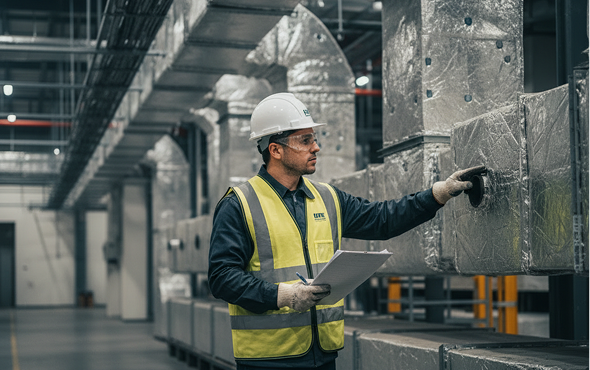
- Technical Assessment — on-site inspection and off-site review of plant, machinery and production lines, confirming makes, capacity, age and operating condition
- Asset Existence & Verification — physical confirmation of assets on a sampling basis, cross-checked against packing lists, manifests and engineering documentation
- Condition Survey — independent condition grading of major equipment, from new through to scrap, against a defined depreciation scale
- Commercial Due Diligence — price verification and current market value of major equipment assets
- Production Capability Review — high-level assessment of plant output capability based on metrics and process data provided
- Valuation (where instructed) — Market or Fair Value on an in-situ (going concern) or ex-situ (removal) basis
- Acquisition & Investment — verify the asset base before buying an operating plant or equipment package, including cross-border purchases.
- Secured Lending — give lenders independent confirmation of asset existence, condition and value.
- Financial Reporting & Audit — support purchase price allocation, useful-life assessment and fair value under IFRS.
- Restructuring & Disposal — confirm what exists and what it's worth ahead of liquidation, receivership or sale.
- Insurance & Risk — establish a verified asset base for cover and claims.
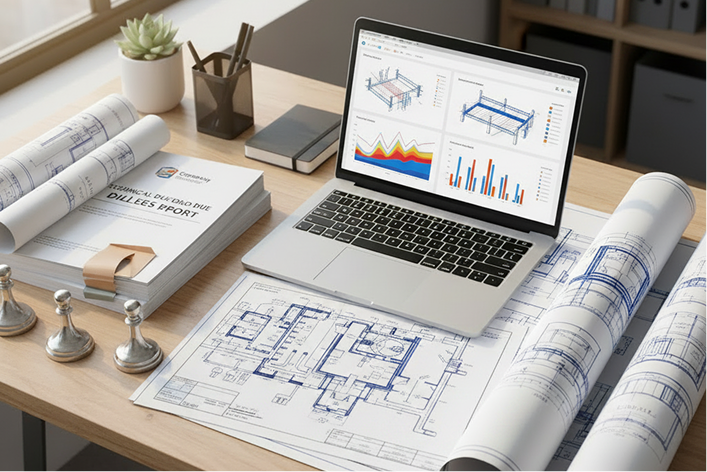
Western VAS approaches every technical due diligence engagement in Dubai through a structured process that combines engineering assessment with valuation discipline — giving buyers, lenders and auditors complete confidence in an operation's physical assets.
We begin with planning and scoping, holding an inception meeting to confirm the assets under assessment, the basis of assessment (in-situ or ex-situ) and the information required. Site contacts are identified and access arranged so the engagement proceeds without delay.
We then move to on-site inspection and verification, physically inspecting the major assets to confirm their existence, make, model, capacity, age and condition. Each item is cross-checked against packing lists, manifests and engineering documentation, supported by interviews with site personnel and a review of maintenance and production records.
Where valuation is instructed, we draw on market evidence from dealers, manufacturers and auction data, applying Direct Market Comparison or Depreciated Replacement Cost as appropriate. Findings are consolidated into a single, audit-ready report — issued in draft for review, then finalised to RICS Red Book and IVS standards where a valuation opinion is included.
- 1 · Scope the engagement — tell us about the asset base, the transaction and the basis required; we confirm scope and information needs.
- 2 · Inspect & verify — we physically inspect and verify the assets, cross-checking against documentation.
- 3 · Deliver the report — you receive a defensible due-diligence report covering existence, condition, capability and value where instructed.
Engineering + Valuation in One
Technical assessment and commercial valuation under a single, coordinated engagement.Independent Verification
Physical, on-site confirmation of assets — not a desktop review of client records.RICS-Regulated
Valuation opinions delivered to RICS Red Book and IVS standards by a Chartered Valuation Surveyor.Defensible & Audit-Ready
Structured to withstand auditor, lender and counterparty scrutiny.What is technical due diligence on industrial assets?
It’s an independent pre-transaction assessment confirming that an operation’s physical assets exist, what condition they’re in, whether the plant performs as claimed, and what they’re worth. It combines engineering inspection, asset verification and commercial valuation in one report.
How is technical due diligence different from a valuation?
A valuation answers what assets are worth. Technical due diligence goes further — verifying existence, assessing condition and capacity, cross-checking documentation, and reviewing production capability. Valuation is one component within a broader risk-assessment exercise.
What does the asset verification involve?
A physical inspection — typically on a sampling basis for large asset bases — confirming each major item’s existence, make, model, capacity, year and condition, cross-checked against packing lists, manifests and engineering documents.
Do you assess whether the plant can produce at its rated capacity?
We provide a high-level review of production capability based on the plant metrics and process data supplied. Detailed process-technology, throughput and expansion analysis fall outside standard scope but can be commissioned separately.
What's the difference between in-situ and ex-situ assessment?
In-situ assesses assets as installed and operating within the business (going concern). Ex-situ assesses them for removal and resale — excluding installation, and reflecting removal, transport and re-commissioning costs. The transaction type determines which premise applies.
Can you carry out diligence on assets being bought from overseas?
Yes. We assess equipment packages being acquired cross-border — verifying condition and specification, and valuing on an ex-situ as-is, where-is basis for removal, with installation and commissioning costs treated separately.
What information do you need to start?
Typically an asset list with makes, models and capacities; purchase invoices for major items; technical drawings (PFDs, P&IDs, layouts); maintenance logs; and capacity-utilisation data. We confirm exact requirements at instruction based on the asset base.
Will your report be accepted by our bank and auditors?
Yes. As a RICS-regulated firm, our reports are structured for reliance by lenders, auditors and counterparties in financing, reporting and transaction contexts.