

Plant, machinery and equipment (P&M) often make up the largest tangible asset base on an industrial company's balance sheet — yet they're also the assets most likely to be under- or over-stated, because nobody has looked at them independently since the day they were bought. A proper valuation puts a defensible, standards-compliant number against that asset base, whatever the purpose behind it.
This guide covers what P&M valuation involves, how the process works, what you need to prepare, the methodologies valuers use, the industries it applies to, and the IFRS and tax considerations that usually sit behind the request.
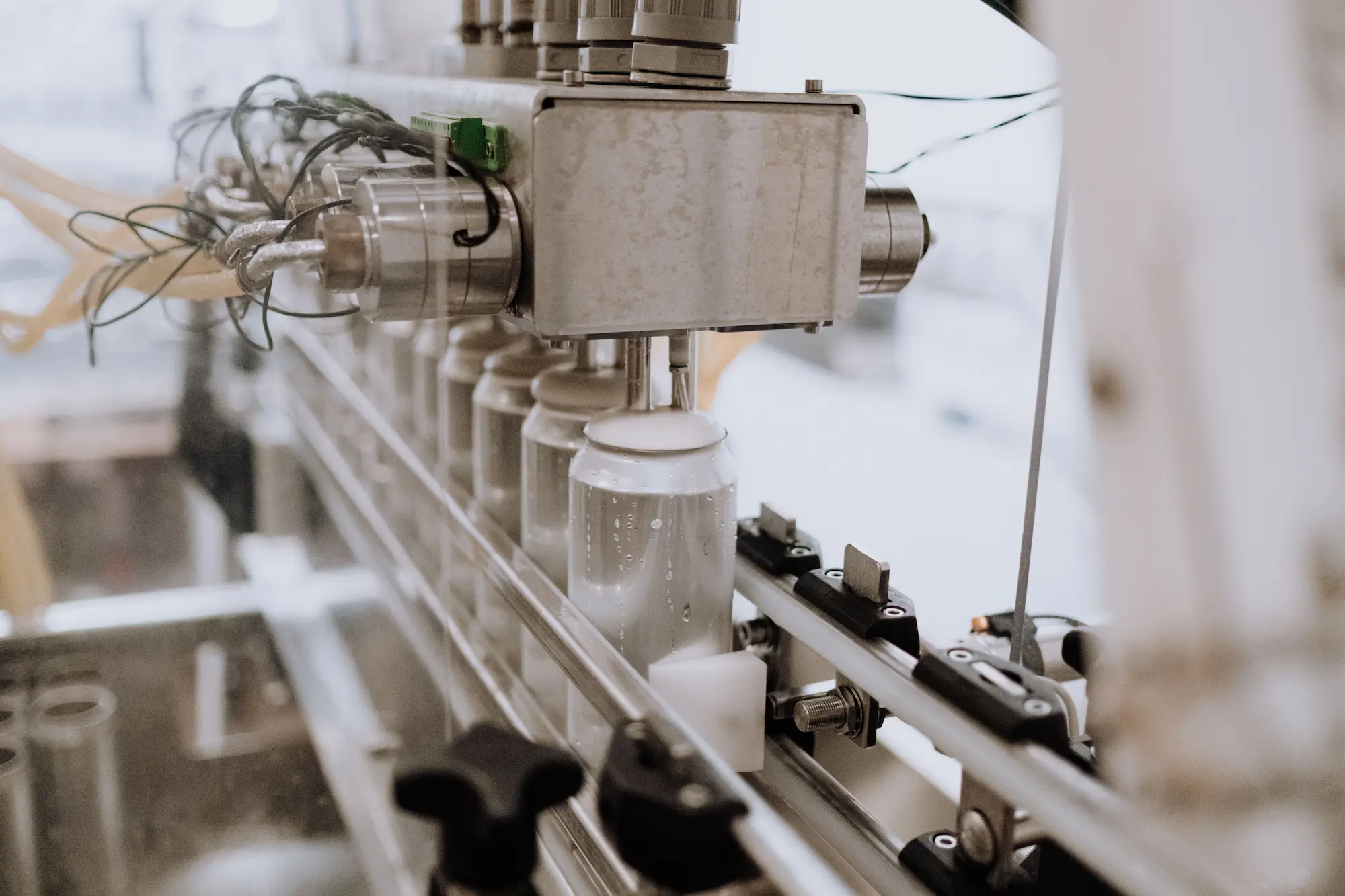
What is plant, machinery & equipment valuation?
It's the process of determining the current value of tangible operating assets — production equipment, machinery, plant installations, and related fixed assets — as opposed to land, buildings, or intangibles. It differs from real estate valuation in one key respect: most machinery has no fixed location value and depreciates on a technical, not just a market, curve. A ten-year-old CNC machine and a ten-year-old warehouse don't lose value the same way.
A P&M valuation typically covers:
- Production and manufacturing lines
- Heavy and mobile construction equipment
- MEP (mechanical, electrical, plumbing) installations
- Generators, compressors, and power equipment
- Cranes, hoists, and lifting equipment
- Process and processing plant (oil & gas, chemical, food)
- Laboratory, medical, and specialised technical equipment
Why you need a valuation
The same asset schedule can require a different value depending on why you're asking. Common triggers:
Fair value or depreciated replacement cost for statutory accounts under IFRS.
Reinstatement value to set adequate cover, or to support a claim.
Security valuation for banks financing acquisition, expansion, or working capital.
Purchase price allocation and asset-level due diligence.
Independent expert evidence for court or arbitration.
Realisable value for administrators, receivers, and creditors.
Assessing whether to repair, replace, or dispose of ageing plant.
Supporting depreciation schedules, transfer pricing, or import valuation.
Each purpose implies a different basis of value (fair value, market value, liquidation value, insurable value), decided before any inspection takes place — not after.
The valuation process
The valuer confirms the purpose of valuation, the basis of value required, the asset schedule (if one exists), and the fee and timeline.
Purchase invoices, asset registers, prior valuations, and maintenance records are reviewed to understand acquisition cost, age, and condition history before the site visit.
Physical inspection to verify existence, condition, specification, and operating status of each asset. Serial numbers and nameplate data are recorded for identification.
The valuer gathers current replacement cost data, secondary market comparables, and — where relevant — income data specific to the asset class.
Physical, functional, and economic obsolescence are applied to arrive at a depreciated value under the chosen methodology.
A signed report is issued, referencing the applicable valuation standard (RICS Red Book / International Valuation Standards), the basis of value, assumptions, and a schedule of individual asset values.
Turnaround is typically 5–10 working days from inspection for a standard asset schedule; larger or multi-site plant takes longer.
What you need to prepare
Valuers work faster and more accurately with:
- Full asset list or fixed asset register (description, quantity, location)
- Purchase invoices or original cost data, with acquisition dates
- Any prior valuation reports
- Manufacturer/model/serial number details where available
- Maintenance and service records
- Site access and a technical contact who can confirm operating condition
- The intended purpose of the valuation (this determines the basis of value used)
Where an asset register doesn't exist or is out of date, the valuer will build one during the site inspection — this adds time but is often the more accurate starting point anyway.
Valuation methodologies
Three approaches are recognised under International Valuation Standards. A valuer selects one, or blends more than one, depending on the asset's market activity and the purpose of the valuation.
Depreciated replacement cost
The current cost of a modern equivalent asset, less deductions for physical deterioration, functional obsolescence, and economic obsolescence. This is the default approach for specialised, purpose-built, or thinly traded equipment where there's no active resale market to reference.
Comparable sales
Value derived from comparable sales of similar equipment in an active secondary market, adjusted for age, condition, hours/usage, and specification differences. Works well for standardised, widely traded assets — generators, forklifts, common construction plant.
Contribution to cash flow
Value derived from the asset's contribution to future cash flow, typically used where a piece of plant is central to a production process and its earning contribution can be isolated. Less common for individual machines, more relevant for a production line or plant as a whole.
Depreciation itself is assessed across three dimensions:
- Physical deterioration — wear from use and age
- Functional obsolescence — the asset is outdated relative to current technology or design
- Economic (external) obsolescence — value loss from factors outside the asset itself, such as falling demand for what it produces
Industries covered
P&M valuation spans any sector with a meaningful fixed-asset base:
Methodology stays consistent across sectors; what changes is the depth of technical knowledge needed to assess condition and obsolescence correctly — a valuer pricing a bottling line needs different reference data than one pricing an excavator.
IFRS and financial reporting considerations
Where a valuation feeds statutory accounts, several IFRS provisions typically apply:
- IFRS 13 (Fair Value Measurement) sets the framework for how fair value is defined and the hierarchy of inputs (quoted prices, observable market data, or unobservable inputs) a valuer must disclose.
- IAS 16 (Property, Plant and Equipment) governs whether assets are held at cost or under the revaluation model, and requires componentisation — separating an asset into parts with materially different useful lives.
- IAS 36 (Impairment of Assets) requires testing for impairment where indicators suggest an asset's carrying value may no longer be recoverable — a valuation often supports or triggers this test.
- Useful life and residual value are reassessed periodically; a valuation frequently surfaces cases where the accounting useful life no longer matches the asset's actual remaining economic life.
Auditors will typically expect the valuer's basis of value, inputs, and assumptions to be disclosed clearly enough to satisfy the fair value hierarchy level claimed.
Tax and regulatory considerations
- Depreciation for tax purposes — a technically supported valuation can substantiate depreciation schedules and useful life assumptions used in tax computations, including under UAE Corporate Tax.
- Transfer pricing — where plant and machinery are transferred between related entities, an independent valuation supports arm's-length pricing documentation.
- Customs valuation — for imported used machinery, an independent valuation can support declared customs value where invoice data is unavailable or disputed.
- Free zone and mainland asset transfers — restructuring between jurisdictions within the UAE often requires an independent asset valuation as part of the transfer documentation.
Tax and customs valuations use different bases of value from financial reporting valuations — this should be confirmed with the valuer and, where relevant, your tax advisor before the engagement is scoped.
Standards and compliance
A valuation intended for financial reporting, litigation, or lending should be prepared to a recognised standard:
- RICS Red Book Global Standards — the leading international valuation standard, incorporating IVS
- International Valuation Standards (IVS) — the global standard-setting framework for valuation practice
- Valuers should hold relevant professional credentials (e.g. MRICS) and, for court-related work, be registered as an approved expert with the relevant judicial authority
Western VAS is RICS-regulated and DLD-accredited, with opinions of value routinely accepted by auditors, lending banks and UAE tax authorities. Plant, machinery & equipment valuation is a specialist practice within the firm, alongside real estate and business assets.
Common pitfalls
Depreciated accounting cost rarely reflects actual current value — it's a tax and accounting construct, not a valuation.
A desktop valuation from an asset list alone misses condition, obsolescence, and non-operating assets that materially change the number.
A market value used for insurance replacement, or a liquidation value used for financial reporting, produces defensible-looking numbers that are wrong for the purpose.
An asset can be in perfect physical condition and still be worth far less because the technology or process it represents has moved on.
FAQ
How long does a plant and machinery valuation take?+
Most engagements complete within 5–10 working days of the site inspection, depending on the number and complexity of assets.
What's the difference between fair value and depreciated replacement cost?+
Fair value is the price an asset would change hands for between willing parties; depreciated replacement cost is a specific method used to estimate that value when no active market exists for the asset.
Can a valuation be used as court evidence?+
Yes, provided it's prepared to a recognised standard (such as RICS Red Book) by a valuer registered as an expert with the relevant court or arbitration body.
Do I need a valuation for every asset, or can I sample?+
For financial reporting, materiality usually dictates full coverage of significant asset classes; for insurance or lending, the lender or insurer's requirements typically set the scope.
How often should plant and machinery be revalued?+
Where the revaluation model is applied under IAS 16, revaluations should be frequent enough that carrying value doesn't materially differ from fair value at the reporting date — commonly every 3–5 years, or sooner for fast-depreciating or volatile asset classes.