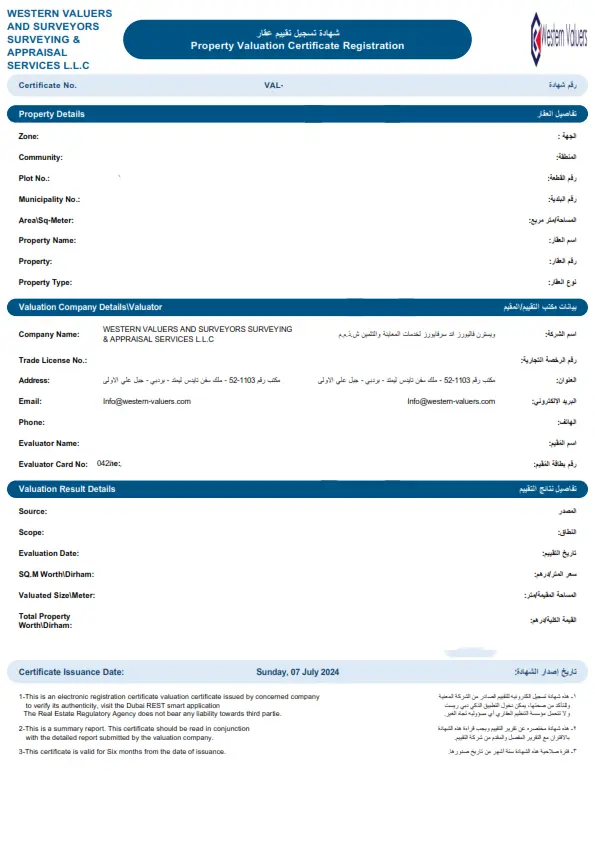
Certificate Validity: Check the certificate’s validity period. It should typically be valid for a certain timeframe, such as six months.
Request a call back.
Would you like to speak to one of our consultants over the phone?
Just submit your details and we’ll be in touch shortly.
By prioritizing an approved and accredited valuation company, you guarantee a reliable valuation, ensure Golden Visa application success, and secure peace of mind by mitigating risks. Let your property investment journey in the UAE begin with the right foundation – a trustworthy and accurate valuation certificate.
Understanding Property Valuation Certificates:
A property valuation certificate, issued by a licensed and accredited valuation company, provides an official estimate of a property’s market value. This unbiased assessment is crucial for various purposes in Dubai’s real estate landscape, including:
Golden Visa Applications: As mentioned earlier, obtaining a Golden Visa through property investment requires a valuation certificate confirming the property’s value meets the minimum threshold (currently AED 2 million or more).
Mortgages: When financing a property purchase, banks rely on valuation certificates to determine the loan amount they can offer.
Taxation: Property valuations are used to calculate potential property taxes, such as the annual rental income tax.
Investment Decisions: Accurate valuations empower investors to make informed decisions about buying, selling, or renting a property.
Why Choose an Accredited Valuation Company?
Using a reputable and accredited valuation company guarantees several benefits:
Accuracy & Credibility: Accredited companies adhere to internationally recognized valuation standards, ensuring a reliable and unbiased estimate. This protects your investment and avoids discrepancies during Golden Visa applications or financial transactions.
Regulatory Compliance: Dubai mandates property valuations for various purposes, including Golden Visas. Employing an unapproved company’s certificate could lead to delays or rejections in your application.
Market Expertise: Accredited companies boast qualified valuers with extensive experience in the dynamic Dubai market. Their local knowledge ensures an accurate valuation reflecting current trends and specific to your property.
Risk Mitigation: Engaging a non-accredited company risks an inaccurate valuation, potentially leading to overpaying for a property or undervaluing it and missing out on potential returns.
MA
admin
Senior Valuer, Western VAS — RICS-qualified chartered surveyor.
Welcome to our blog where we delve into the intriguing world of asset valuation for financial reporting. Discover the significance of accurately valuing assets, explore different methods used, and unravel the challenges faced in this critical process. Let’s embark on a journey to understand how asset valuation impacts financial reporting and why it is essential for businesses to get it right.
The Importance of Asset Valuation in Financial Reporting
Asset valuation plays a crucial role in financial reporting, providing stakeholders with valuable insight into the true worth of a company’s assets. Accurate valuation ensures that financial statements present a fair and reliable picture of an organization’s financial health. It enables investors to make informed decisions based on the actual value of assets rather than estimations or outdated figures.
Moreover, asset valuation helps in assessing risk and determining the appropriate allocation of resources within a business. By understanding the current market value of assets, companies can strategize effectively for growth opportunities or potential challenges. Additionally, proper asset valuation is vital for compliance with accounting standards and regulations to maintain transparency and accountability in financial reporting practices.
In essence, asset valuation forms the foundation for sound decision-making, risk management, and maintaining trust among stakeholders in the realm of financial reporting.
Methods of Asset Valuation
When it comes to asset valuation for financial reporting, there are several methods that companies can use to determine the value of their assets accurately. One common method is the cost approach, which involves determining an asset’s value based on its original purchase price and any additional costs incurred to bring it to its current state.
Another popular method is the market approach, where the value of an asset is determined by comparing it to similar assets in the market. This method helps ensure that assets are valued at fair market prices reflective of current economic conditions.
Additionally, the income approach considers an asset’s potential future earnings when determining its present value. By analyzing cash flows and discount rates, companies can estimate how much an asset is worth based on its income-generating capabilities.
Choosing the appropriate valuation method depends on various factors such as industry standards, regulatory requirements, and company-specific circumstances.
Welcome to the world of Building Valuation Services – where accuracy meets expertise to determine the true value of your property. Whether you’re a homeowner, real estate investor, or looking to buy or sell a building, understanding its worth is essential. In this blog post, we will delve into the importance of accurate building valuation, the various types of services available, and how they can benefit you in making informed decisions. Let’s unlock the secrets behind determining the value of your property with precision and confidence!
Get in Touch with Our Valuation Experts
The Importance of Accurate Building Valuation
Accurate building valuation is crucial for various reasons. Whether you are looking to buy or sell a property, knowing its true value is essential in making informed decisions. Valuing a building accurately ensures that you are not overpaying or underselling, ultimately saving you money and potential headaches down the line.
Moreover, accurate building valuation plays a significant role in securing financing for real estate transactions. Lenders rely on precise valuations to determine the loan amount they are willing to provide. A well-documented valuation report can strengthen your position when negotiating with financial institutions.
Additionally, having an accurate building valuation can help in assessing insurance needs. In case of unforeseen events like natural disasters or accidents, knowing the actual value of your property ensures that you have adequate coverage to protect your investment.
Accurate building valuation services provide transparency and clarity in real estate transactions, helping all parties involved make sound decisions based on reliable information.
When considering property valuation in the UAE, understanding the various factors that influence costs is essential. Here we discuss the key elements, including market trends, property location, and valuation methods.
Understanding the costs involved in property valuation is crucial for making informed decisions.
Understanding the costs involved in property valuation is crucial for making informed decisions about the cost of your investment.
Understanding the Cost Factors in Property Valuation
Assessing the potential costs associated with property valuation can significantly impact your financial planning.
Location is another pivotal factor. Properties in prime locations with easy access to amenities, transport links, and community facilities generally have higher valuation costs compared to those in less desirable areas.
Different valuation methods may lead to varying costs, so understanding each approach’s implications on your overall cost is essential.
Market trends play a crucial role in determining property values. For instance, in booming areas like Dubai Marina or Abu Dhabi’s Corniche, property prices may surge due to high demand, affecting valuation costs significantly.
Valuation methods vary, with approaches such as the sales comparison method, income approach, and cost approach being prevalent. Each method has its implications on the final valuation costs.
Finally, engaging with a qualified property valuer can provide insights that may lead to a more accurate assessment of your property’s worth.
Understanding local regulations, including zoning laws and property taxes, can also affect costs. Having a comprehensive grasp of these factors is vital for accurate property valuation.
Additionally, knowing how property condition affects valuation can help you prepare for unexpected costs.
It’s essential to consider how the overall costs can vary based on specific property features.
Our experts can help clarify the various costs associated with property valuation.
Additionally, property condition and age impact valuation. Newly built properties or those with modern renovations typically command higher valuations, while older properties may incur costs for required repairs.
Would you like to speak to one of our consultants over the phone about the cost of property valuation?
Just submit your details and we’ll be in touch shortly.
In the dynamic business landscape of the United Arab Emirates (UAE), corporate tax planning plays a crucial role in optimizing financial performance and ensuring compliance with regulatory requirements. One essential aspect of effective tax planning is real estate and asset valuation. This article explores the significance of accurate valuation strategies for corporate tax in the UAE and provides expert insights into maximizing tax benefits through strategic valuation practices.
Importance of Accurate Asset Tax Valuation for Corporate Taxation:
Accurate valuation of real estate and assets is paramount for determining taxable income and identifying potential tax-saving opportunities. By valuing assets at their fair market value, businesses can minimize tax liabilities and maximize deductions, leading to significant cost savings over time.
Overview of Corporate Tax in the UAE:
The UAE boasts a favorable tax regime for businesses, with no federal corporate income tax imposed on companies operating in most sectors. However, certain businesses may be subject to corporate tax at the emirate level, depending on their activities and legal structure. It is essential for businesses to understand the corporate tax landscape in the UAE and comply with applicable regulations to avoid penalties and ensure financial sustainability.
Key Considerations for Asset Valuation in Corporate Taxation:
a. Valuation Methods: Businesses can employ various valuation methods, such as the income approach, market approach, and cost approach, to determine the fair value of their real estate and assets for tax purposes.
b. Tax Depreciation and Amortization: Accurate valuation directly impacts tax depreciation and amortization deductions, allowing businesses to optimize their tax liabilities and cash flow management.
c. Fair Value Assessments: Fair value assessments are essential for proper tax reporting and compliance with accounting standards, providing transparency and credibility to financial statements.
Benefits of Professional Asset Tax Valuation Services for Corporate Taxation:
a. Compliance with UAE Tax Regulations: Engaging professional valuation services ensures compliance with UAE tax regulations and minimizes the risk of non-compliance issues.
b. Minimizing Tax Liabilities: Expert valuation services help identify tax-saving opportunities and optimize tax planning strategies, leading to reduced tax liabilities and improved financial performance.
c. Audit Support and Documentation: Professional valuation reports serve as valuable documentation during tax audits, providing evidence of fair value assessments and supporting tax positions taken by businesses.
Real estate and asset valuation are indispensable components of effective tax planning for businesses operating in the UAE. By leveraging accurate valuation strategies and engaging professional valuation services, businesses can optimize tax benefits, reduce liabilities, and ensure compliance with corporate tax regulations. Embracing strategic valuation practices is essential for achieving financial resilience and long-term success in the dynamic business environment of the UAE.
Unveiling the Secrets to Accurate Financial Reporting
In the dynamic business landscape of the United Arab Emirates (UAE), real estate and asset valuation hold significant importance for accurate financial reporting. Valuation plays a crucial role in determining the worth of real estate properties, assets, and investments. Whether it is for accounting purposes, financial statement analysis, or investment decision-making, having accurate and reliable valuation reports is essential. This article explores the secrets to accurate financial reporting through real estate and asset valuation in the UAE.
Get in Touch with Our Valuation Experts
Significance of Accurate Valuation:
Accurate valuation is vital as it enables businesses and investors to present reliable financial statements that reflect the true value of their assets. By obtaining precise valuations, organizations can provide stakeholders with transparency, reduce the risk of misrepresentation, and meet compliance and reporting requirements. Additionally, accurate valuation supports effective decision-making related to acquisitions, divestitures, and strategic investments.
Regulatory Environment in the UAE:
The UAE has a well-developed regulatory framework for real estate and asset valuation. Regulatory bodies such as the Dubai Land Department (DLD) and the Abu Dhabi Department of Municipalities and Transport (DMT) oversee valuation practices to maintain fairness, consistency, and transparency in the market. Complying with the regulations set forth by these authorities ensures integrity in financial reporting.
Key Considerations for Valuation in the UAE Market:
Market Dynamics:
The UAE real estate market is known for its volatility. Rapid changes in property values and market conditions make accurate valuation challenging. Professional valuers are adept at analyzing market trends, supply and demand factors, and other variables to provide accurate and up-to-date valuations.
Property Types:
Valuation practices can differ depending on the type of property being evaluated. Residential, commercial, industrial, and hospitality assets each require specific valuation methodologies due to variations in income potential, usage, and market trends. Expert valuers employ industry-standard approaches tailored to specific property types.
Benefits of Engaging Professional Valuation Services:
Partnering with professional valuation services in the UAE offers numerous benefits, including:
Expertise and Experience: Valuation professionals bring in-depth market knowledge and expertise in the UAE real estate sector, enabling them to accurately assess property values and asset worth. Their experience ensures comprehensive evaluations based on both objective analysis and industry acumen.
Objectivity and Independence:
External valuers provide an unbiased and independent perspective, free from internal influences or conflicts of interest. This impartiality enhances the credibility and reliability of valuations, reducing the risk of potential controversies or challenges.
Compliance and Standards:
Professional valuers help businesses comply with regulatory requirements and international standards. By following established guidelines, they ensure that valuations meet the necessary criteria and align with industry best practices, enhancing the integrity of financial reporting.
Accurate real estate and asset valuation play a vital role in ensuring transparent financial reporting in the UAE. By considering market dynamics, property types, and international standards, businesses can obtain reliable valuation reports for various purposes, including financial statement analysis, tax planning, and investment decision-making. Engaging professional valuation services not only enhances compliance and credibility but also minimizes risks and maximizes opportunities. Embracing the secrets to accurate financial reporting through real estate and asset valuation enables organizations in the UAE to thrive in a rapidly evolving business environment.
Step into a world of endless opportunities and unparalleled luxury with the Golden Visa program in the UAE. Imagine unlocking exclusive benefits, seamless residency, and a pathway to long-term security in one of the most thriving business hubs in the world. Let’s delve into the realm of Golden Visas in the UAE and discover how this golden opportunity can change your life forever!
Get in Touch with Our Valuation Experts
Types of Golden Visas offered in UAE
In the UAE, there are several types of Golden Visas offered to individuals seeking long-term residency in the country. One of the most common types is the Golden Visa for investors, which allows those who make substantial financial investments in the UAE to secure residency for themselves and their families.
Another type of Golden Visa available is for entrepreneurs and business owners who have successfully established a company in the UAE. This visa provides them with stability and security to grow their businesses within the region.
Moreover, there are Golden Visas extended to outstanding students and talented professionals in various fields such as science, art, culture, and sports. These visas aim to attract top talent from around the world to contribute to the growth and development of the UAE’s diverse industries.
These different types of Golden Visas cater to a wide range of individuals looking to establish roots in the thriving economy of the United Arab Emirates.
Eligibility Criteria for Golden Visas
To be eligible for a Golden Visa in the UAE, individuals must meet certain criteria set by the government. The most common way to qualify is through real estate investment, where investors must own property worth at least 1 million AED. Additionally, applicants need to demonstrate stable income and financial security to support themselves and their dependents while residing in the country.
Moreover, individuals seeking a Golden Visa should have a clean criminal record and provide evidence of good conduct. They are also required to hold valid health insurance coverage during their stay in the UAE. Furthermore, it’s crucial for applicants to show a genuine commitment to contributing positively to society and the economy of the Emirates.
Meeting these eligibility requirements ensures that only qualified and responsible individuals are granted the prestigious Golden Visa status in the UAE.
Benefits of Obtaining a Golden Visa
Obtaining a Golden Visa in the UAE comes with a plethora of benefits that make it an attractive option for investors and individuals looking to secure their future. One major advantage is the long-term residency offered, providing stability and peace of mind to visa holders. This allows them to live, work, study, and retire in the UAE without the need for constant visa renewals.
Additionally, Golden Visa holders have access to superior healthcare facilities and education opportunities in the country. They can also sponsor family members for their visas, ensuring loved ones can join them in enjoying all that the UAE has to offer. Furthermore, holding a Golden Visa opens up doors for investment opportunities and business growth within one of the most dynamic economies in the world.
Obtaining a Golden Visa not only grants security and flexibility but also serves as a gateway to new possibilities and a high quality of life in the vibrant landscape of the UAE.
How to Apply for a Golden Visa in UAE
Applying for a Golden Visa in the UAE is a straightforward process that offers long-term residency benefits to investors. To start your application, gather all necessary documentation including passport copies, proof of income, and investment details.
Next, submit your application through the Federal Authority for Identity and Citizenship (ICA) or apply online through their portal. Make sure to pay the required fees as part of the application process.
Once your application is submitted, it will undergo review by the relevant authorities. This may take some time so be patient during this stage.
If your application is approved, you will receive notification to proceed with biometrics registration at an authorized center. This step is crucial for finalizing your visa issuance.
Upon successful completion of all requirements, you will receive your Golden Visa granting you long-term residency in the UAE as an investor.
Comparison with Other Countries’ Golden Visa Programs
When it comes to Golden Visa programs, the UAE stands out with its attractive benefits and streamlined application process. Compared to other countries offering similar programs, such as Portugal and Greece, the UAE’s Golden Visa program is known for its flexibility and efficiency.
One key difference is that in the UAE, investors can obtain a long-term residency visa without the requirement of residing in the country for a certain period each year. This makes it more convenient for investors who may not be able to commit to living in the UAE full-time.
Additionally, the variety of investment options available in the UAE sets it apart from other countries’ programs. From real estate investments to business ventures, investors have multiple avenues to qualify for a Golden Visa based on their preferences and financial capabilities.
While each country’s Golden Visa program has its unique advantages and requirements, the UAE’s program continues to attract investors worldwide due to its competitive offerings and investor-friendly policies.
Challenges and Controversies Surrounding the Golden Visa Program
The Golden Visa program in the UAE, while offering a host of benefits, is not without its challenges and controversies. One key issue that has sparked debate is the potential impact on local job opportunities. Critics argue that by granting long-term residency to foreign investors, there may be a risk of overlooking Emirati talent for certain positions.
Another point of contention revolves around transparency and due diligence in the application process. Some skeptics question whether all applicants undergo thorough background checks to ensure they meet the eligibility criteria. This raises concerns about potential loopholes or risks associated with granting visas to individuals who may not have genuine intentions.
Moreover, there are discussions regarding the socio-economic implications of introducing such programs. It’s important to consider how these initiatives could affect housing prices, demographics, and overall societal dynamics in the long run. Balancing economic growth with social stability remains a critical aspect that requires careful consideration when implementing Golden Visa schemes like those offered in the UAE.
Conclusion: Is the Golden Visa in UAE Worth it?
In weighing the benefits, eligibility criteria, application process, and challenges surrounding the Golden Visa program in the UAE, it is evident that this scheme offers significant advantages to investors and individuals seeking long-term residency.
The Golden Visa not only provides a pathway to residency but also opens up opportunities for business growth, education access for children, healthcare benefits, and a stable environment for personal and professional development.
For those who meet the eligibility requirements and are willing to invest in real estate or other qualifying sectors in the UAE, obtaining a Golden Visa can be a valuable opportunity. The program presents a chance to establish roots in a dynamic economy while enjoying the perks of residency without needing sponsorship from an employer.
Whether the Golden Visa in UAE is worth it depends on individual circumstances and goals. For many investors looking for stability, security, and growth potential in one of the world’s leading business hubs, acquiring a Golden Visa could indeed be an advantageous choice.
Golden Visa in Dubai for Property Owners
In recent years, Dubai has emerged as a premier destination for investors seeking not only lucrative real estate opportunities but also the prospect of acquiring residency through property ownership. The introduction of the Golden Visa scheme has further solidified Dubai’s position as a global hub for investors, offering a pathway to long-term residency for eligible property owners. Let’s delve into the details of the Golden Visa program in Dubai and its significance for investors.
Golden Visa : Understanding the Program
The Golden Visa program in Dubai is a residency scheme designed to attract foreign investors, entrepreneurs, and professionals who contribute significantly to the economy. It provides eligible individuals and their families with long-term residency visas, granting them the right to live, work, and study in the UAE without the need for a local sponsor.
Eligibility Criteria
To qualify for the Golden Visa in Dubai through property ownership, investors must meet certain criteria, including:
Property Ownership: Applicants must own property valuation in Dubai with a minimum value set by the authorities. The property can be residential, commercial, or industrial.
Investment Threshold: The value of the property owned must meet or exceed the specified investment threshold, which may vary depending on the type and location of the property.
Financial Stability: Applicants must demonstrate financial stability and the ability to support themselves and their dependents during their stay in the UAE.
Good Conduct: Applicants should have a clean criminal record and maintain a good reputation.
Benefits of the Golden Visa
Participating in the Golden Visa program offers a range of benefits for property owners, including:
Residency Rights: Golden Visa holders and their families can reside in the UAE for extended periods, providing them with stability and security.
Access to Services: Visa holders can access various services, including healthcare, education, and banking, on par with UAE citizens.
Business Opportunities: Residency opens doors to business opportunities, allowing investors to establish or expand their enterprises in Dubai’s dynamic market.
Education Benefits: Families can enroll their children in top-tier schools and universities in Dubai, renowned for their quality education and international curriculum.
Quality of Life: Dubai offers a high standard of living, with world-class infrastructure, amenities, and a vibrant cultural scene, making it an attractive destination for residents.
Application Process
The application process for the Golden Visa involves submitting the necessary documentation, including proof of property ownership, financial statements, and background checks. Qualified applicants can expect a streamlined and efficient process facilitated by the relevant authorities.
Conclusion
The Golden Visa program in Dubai presents a golden opportunity for property owners to secure long-term residency in one of the world’s most dynamic and cosmopolitan cities. With its investor-friendly policies, thriving economy, and unparalleled lifestyle offerings, Dubai continues to attract discerning investors from around the globe. Embrace the potential of the Golden Visa program and embark on a journey of prosperity and growth in the heart of the Middle East.
At Western Valuers & Suverors, we’re more than just property valuation experts; we’re your dedicated advisors in the ever-evolving UAE real estate market. As a leading provider in the region, we take pride in our commitment to delivering comprehensive solutions that are meticulously tailored to meet your unique needs.
Welcome to the world of asset valuation – where numbers meet expertise, and precision is paramount. Whether you’re a business owner, investor, or financial professional, understanding the value of your assets is crucial for making informed decisions. In this blog post, we delve into the intricate realm of asset valuation, exploring its significance, methods, common pitfalls to avoid, and the undeniable benefits of enlisting an expert’s help. Join us on this insightful journey as we uncover the secrets behind accurate asset valuation and showcase real-life success stories that highlight its transformative power. Let’s dive in!
What is Asset Valuation?
Asset valuation is the process of determining the monetary value of an asset, whether it’s machinery, vehicles, real estate, or intellectual property. It involves assessing the worth of an asset based on various factors such as market conditions, demand, and depreciation rates.
For businesses, accurate asset valuation is essential for financial reporting, strategic planning, and decision-making purposes. It provides stakeholders with a clear understanding of the company’s overall financial health and helps in evaluating investment opportunities.
Different methods are used for valuing assets depending on their nature and purpose. These methods include cost approach, income approach, and market approach. Each method offers a unique perspective on how to determine the value of an asset effectively.
Asset valuation serves as a crucial tool for maximizing returns on investments and ensuring transparency in financial transactions.
The Importance of Accurate Asset Valuation
Accurate asset valuation is essential for businesses to make informed decisions about their financial health and future growth. Knowing the true value of your assets allows you to optimize resources, secure financing, and plan strategically.
By understanding the worth of your assets, you can determine their contribution to overall company value and assess performance accurately. This knowledge enables you to identify areas for improvement, allocate resources efficiently, and enhance profitability.
Moreover, accurate asset valuation enhances transparency in financial reporting, which builds trust with stakeholders like investors and lenders. It also ensures compliance with accounting standards and regulations.
Having a precise valuation of assets provides a solid foundation for negotiation in transactions such as mergers or acquisitions. It helps in setting fair prices, reducing risks of undervaluation or overvaluation that could impact deal outcomes negatively.
In conclusion…
Factors that Influence Asset Valuation
Asset valuation is a complex process influenced by various factors. One key factor is the economic conditions, such as supply and demand dynamics in the market. The industry trends also play a significant role in determining the value of assets, as different sectors have varying growth potentials.
The condition and age of the asset are crucial factors that impact its valuation. Well-maintained assets typically hold higher value compared to those requiring extensive repairs or upgrades. Additionally, technological advancements can affect asset values, especially in rapidly evolving industries where outdated equipment may lose value quickly.
Market comparables and competition within the industry can influence asset valuations significantly. Understanding how similar assets are priced in the market helps appraisers determine a fair value for the subject asset. Regulatory changes and environmental factors also play a role in asset valuation, with compliance requirements impacting overall worth.
Different Methods of Asset Valuation
Asset valuation can be done using various methods, each providing a different perspective on the value of an asset. One common method is the cost approach, which determines the value based on how much it would cost to replace the asset with a similar one.
Another method is the income approach, taking into account the income generated by the asset to determine its overall value. This method is often used for income-producing assets like rental properties or businesses.
The market approach involves comparing the asset to similar ones that have recently been sold in the market. By looking at comparable sales data, valuers can estimate what price similar assets are fetching in current market conditions.
Choosing the right method depends on factors such as the type of asset being valued and its purpose. Each method has its own advantages and limitations, so it’s important to select wisely based on what best suits your specific needs.
Common Mistakes to Avoid in Asset Valuation
When it comes to asset valuation, there are common mistakes that can lead to inaccurate assessments. One of the key errors is relying solely on historical data without considering current market trends and conditions. This can result in undervaluing or overvaluing assets.
Another mistake is overlooking the importance of conducting thorough inspections and assessments of the assets being valued. Without a detailed examination, crucial information may be missed leading to inaccurate valuations.
Using outdated valuation methods or tools is another pitfall to avoid. In today’s rapidly changing business environment, it’s essential to stay up-to-date with the latest valuation techniques and technology to ensure accurate results.
Failing to seek expert advice and guidance during the asset valuation process can also lead to costly mistakes. Consulting with professionals who have experience in asset valuation can help prevent errors and ensure precise valuations for better decision-making.
Benefits of Hiring an Expert for Asset Valuation
When it comes to asset valuation, hiring an expert can offer numerous benefits. These professionals have the knowledge and experience to accurately assess the value of your assets, ensuring you make informed decisions.
An expert in asset valuation can help you avoid costly mistakes that could arise from inaccurate valuations. They understand the market trends and factors influencing asset values, providing you with a comprehensive assessment.
By hiring an expert for asset valuation, you can save time and effort by entrusting this crucial task to someone who specializes in this field. Their expertise allows for a thorough evaluation process that considers all relevant aspects of your assets.
Furthermore, working with a professional in asset valuation gives you peace of mind knowing that the valuation is conducted meticulously and ethically. This ensures transparency and credibility in the process, which is essential for any business or individual seeking accurate valuations.
Case Studies: Successful Asset Valuations
Case studies showcasing successful asset valuations provide valuable insights into the real-world application of valuation methods.
In one instance, a construction company benefitted from accurate plant and machinery valuations, enabling them to make informed financial decisions and optimize their asset management strategies.
Another case study involved a logistics company that utilized expert vehicle valuations to determine the fair market value of their truck and trailer fleet, leading to improved budgeting and procurement processes.
Additionally, a manufacturing facility conducted equipment valuations to assess the depreciation of their machinery over time, helping them plan for future upgrades and replacements effectively.
These success stories highlight the importance of engaging professionals for asset valuation services tailored to specific industries and assets.
Conclusion
As we wrap up our discussion on asset valuation, it becomes clear that the process is multifaceted and crucial for businesses across various industries. From determining the value of plant and machinery to assessing logistics-related vehicles, expert asset valuation plays a pivotal role in decision-making.
By understanding the factors that influence asset valuation and exploring different methods available, companies can make informed choices that align with their strategic objectives. Avoiding common mistakes in this process is essential to ensure accuracy and reliability.
When considering asset valuation, it’s important to recognize the benefits of hiring experts in the field who can provide specialized knowledge and experience. Case studies highlighting successful valuations showcase the impact of proper asset assessment on business outcomes.
Embracing expert asset valuation practices can lead to enhanced financial transparency, risk management, and overall operational efficiency within organizations.
Understanding Asset Valuation
Asset valuation is the process of determining the worth of an entity’s assets. Understanding asset valuation is crucial for businesses to make informed financial decisions. It involves assessing the value of tangible and intangible assets such as machinery, equipment, properties, patents, and more.
Accurate asset valuation provides organizations with a clear picture of their net worth and helps in strategic planning. Factors like market conditions, demand for similar assets, depreciation rates, and economic trends play a significant role in determining asset value.
Different methods are used for asset valuation including cost approach, income approach, and market approach. Each method has its own advantages depending on the type of asset being valued. Choosing the right method requires expertise and industry knowledge to ensure precision.
Understanding asset valuation empowers businesses to manage their resources effectively and optimize their financial performance through well-informed decision-making processes.
Importance of Accurate Asset Valuation
Accurate asset valuation is crucial for businesses to make informed financial decisions. It provides a clear understanding of the worth of assets, enabling companies to assess their overall financial health and plan strategically for the future.
By determining the true value of assets such as plant machinery, vehicles, and equipment, organizations can optimize resource allocation, secure loans based on asset value, or even attract potential investors.
Having precise valuations also helps in avoiding overpaying for assets during acquisitions or sales transactions. It ensures fair deals are made based on reliable information rather than estimations.
Inaccurate asset valuations can lead to misleading financial statements and impact profitability negatively. Therefore, investing in accurate asset valuation services is an essential aspect of effective business management that should not be overlooked.
Factors Affecting Asset Valuation
Asset valuation is influenced by various factors that can impact the overall value of an asset. One key factor is the current market conditions, as supply and demand dynamics play a crucial role in determining asset prices. Economic trends also have a significant impact on asset valuation, with factors such as inflation rates and interest rates affecting the perceived value of assets.
The condition of the asset itself is another important factor to consider, as well-maintained assets are generally valued higher than those in poor condition. Additionally, technological advancements can influence asset valuation, especially for equipment or machinery that may become obsolete over time.
Furthermore, regulatory changes and industry-specific factors can also affect asset valuation. For example, changes in regulations governing environmental standards may impact the value of certain assets within industries like manufacturing or energy production.
Understanding these various factors is essential for accurately valuing assets and making informed decisions about their financial worth.
Different Methods of Asset Valuation
Asset valuation can be approached through various methods, each offering a unique perspective on determining the value of different assets. One common method is the cost approach, which involves calculating the replacement cost of an asset and adjusting for depreciation over time.
Another widely used method is the income approach, where the value of an asset is determined based on its ability to generate income in the future. This method often involves complex financial calculations and projections to estimate cash flows and discount rates.
The market approach relies on comparing similar assets that have recently been sold in the market to determine a fair market value for the asset in question. This method requires access to relevant market data and knowledge of comparable sales.
Each valuation method has its strengths and limitations, making it important to consider multiple approaches when valuing assets accurately. By utilizing a combination of methods, experts can provide a comprehensive assessment of an asset’s true worth.
How to Choose the Right Expert for Asset Valuation?
When it comes to choosing the right expert for asset valuation, there are key factors to consider. First, look for professionals with specialized knowledge and experience in valuing the specific type of assets you have. Whether it’s plant machinery or vehicles, expertise is crucial.
Consider their track record and reputation in the industry. Reading reviews and asking for referrals can provide valuable insights into their credibility.
Furthermore, ensure they use a variety of valuation methods to accurately determine the value of your assets. A diverse skill set will lead to a more comprehensive valuation process.
Additionally, communication is key. Choose an expert who can explain complex valuation concepts in a clear and understandable manner.
Trust your instincts when selecting an asset valuation expert. A good fit both professionally and personally can make a significant difference in the outcome of the valuation process.
Conclusion
Asset valuation is a crucial process for businesses to understand the value of their assets accurately. By determining the worth of plant, machinery, vehicles, and equipment, companies can make informed decisions regarding investments, financial reporting, insurance coverage, mergers or acquisitions.
Choosing the right expert for asset valuation is essential to ensure an unbiased and precise assessment. With factors such as expertise in specific industries or types of assets being key considerations when selecting a valuation professional.
By avoiding common mistakes and utilizing various methods for asset valuation under the guidance of experts who specialize in this field, companies can maximize their returns on investment and mitigate risks associated with inaccurate valuations.
Accurate asset valuation provides businesses with a solid foundation for strategic planning and decision-making processes that drive growth and success in today’s competitive market landscape.
In the bustling world of real estate, understanding the value of your assets is crucial. Whether you’re an investor eyeing potential returns or a business owner needing to report financial standings, property valuation plays a pivotal role. In Dubai and Abu Dhabi, where markets can shift rapidly, having accurate valuations is not just important; it’s essential.
Navigating this complex landscape requires expertise and precision. That’s where specialized services from professionals like Western Valuers & Surveyors come into play. With their deep knowledge in valuation practices aligned with RICS standards, they ensure that every property you own reflects its true market value. Join us as we explore how effective portfolio valuation can enhance your financial reporting strategies and support sound decision-making for future investments.
Portfolio Valuation and Advisory Services
Valuationand advisory services are fundamental in real estate management. They provide an accurate assessment of a property’s worth, helping stakeholders make informed decisions.
These services extend beyond mere numbers. Expert consultants analyze market trends, property conditions, and comparable sales to deliver comprehensive insights. This analysis supports strategic planning for investors and businesses alike.
In the dynamic markets of Dubai and Abu Dhabi, timely valuations can significantly impact investment success. Understanding local regulations and economic factors is essential for effective advisory services.
Western Valuers & Surveyors stand out by offering tailored solutions to meet diverse client needs. Their expertise ensures that your financial reports reflect true asset values while adhering to industry standards like RICS protocols.
With their guidance, clients navigate complex transactions confidently, optimizing opportunities within the ever-evolving landscape of property valuation.
Western valuers & Surveyors Expertise
Western Valuers & Surveyors brings a wealth of expertise to the table, particularly in property valuation across Dubai and Abu Dhabi. Their team comprises seasoned professionals who understand local market dynamics.
Utilizing advanced methodologies, they ensure accurate assessments tailored to each client’s needs. This approach is crucial for businesses looking to make informed financial decisions.
Their affiliation with RICS underscores their commitment to high standards and professionalism. Clients can trust that their valuations comply with international best practices.
Beyond numbers, Western Valuers emphasizes relationships. They work closely with clients, providing insights that extend beyond mere valuations.
This personalized service sets them apart in a competitive landscape, making them a reliable choice for anyone seeking comprehensive advisory solutions in real estate investment.
Valuation Accounting and Internal Audits
Valuation accounting plays a crucial role in maintaining financial integrity. Accurate property valuation is essential for businesses, especially when preparing for internal audits.
Auditors rely on precise valuations to assess the accuracy of financial statements. This ensures that stakeholders have a clear understanding of an organization’s assets. When property values are misrepresented, it can lead to significant discrepancies.
In Dubai and Abu Dhabi’s competitive real estate market, valuers must adhere to RICS standards. These guidelines ensure transparency and consistency in evaluations. Western Valuers & Surveyors provide expertise tailored to regional requirements.
Regular internal audits that incorporate proper valuations help organizations identify potential risks early on. This proactive approach enables firms to adjust their strategies effectively and maintain compliance with regulatory frameworks while fostering trust among investors and clients alike.
Valuation for Financing and Loan Security
When it comes to financing and loan security, accurate property valuation is non-negotiable. Lenders require reliable assessments to mitigate risk and ensure sound investment decisions. A precise property valuation provides them with the necessary insights into market conditions.
For businesses in Dubai and Abu Dhabi, this means partnering with experts who understand local dynamics. Western Valuers & Surveyors are well-versed in these markets, offering tailored solutions that align with financial objectives. Their RICS accreditation guarantees adherence to international standards.
With their expertise, clients can navigate complex financing structures confidently. They deliver thorough evaluations that satisfy lenders while also enhancing portfolio management strategies.
Investing in professional valuation services not only secures funding but also strengthens your overall financial standing within a competitive real estate landscape.